


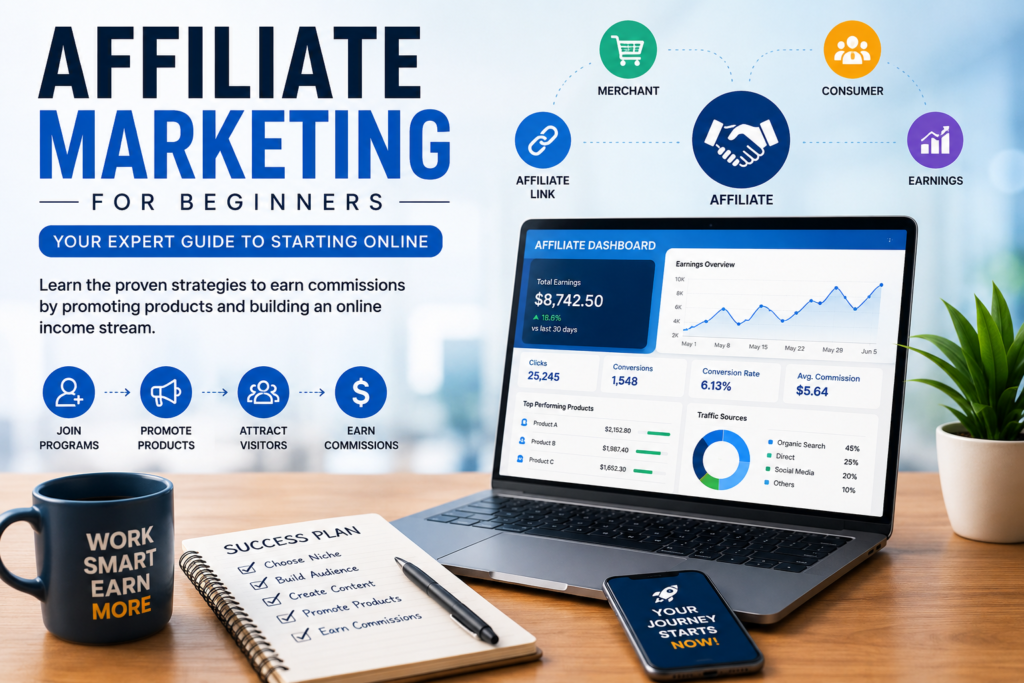
Affiliate marketing presents a compelling opportunity for individuals seeking to build an online income stream. It’s a performance-based business model where you earn a commission by promoting other companies’ products or services. For those new to the digital business landscape, understanding the fundamentals of affiliate marketing for beginners is the first crucial step toward establishing a successful venture. This guide will demystify the process, offering a clear roadmap from understanding the basics to implementing effective strategies, ensuring you have the knowledge to begin your journey in affiliate marketing.
What is Affiliate Marketing and How Does It Work?
At its core, what is affiliate marketing? It’s a straightforward concept: you, as an affiliate, promote a product or service, and when someone makes a purchase through your unique affiliate link, you receive a percentage of that sale as a commission. This model benefits both the merchant (who gains sales) and the affiliate (who earns income without creating their own product.
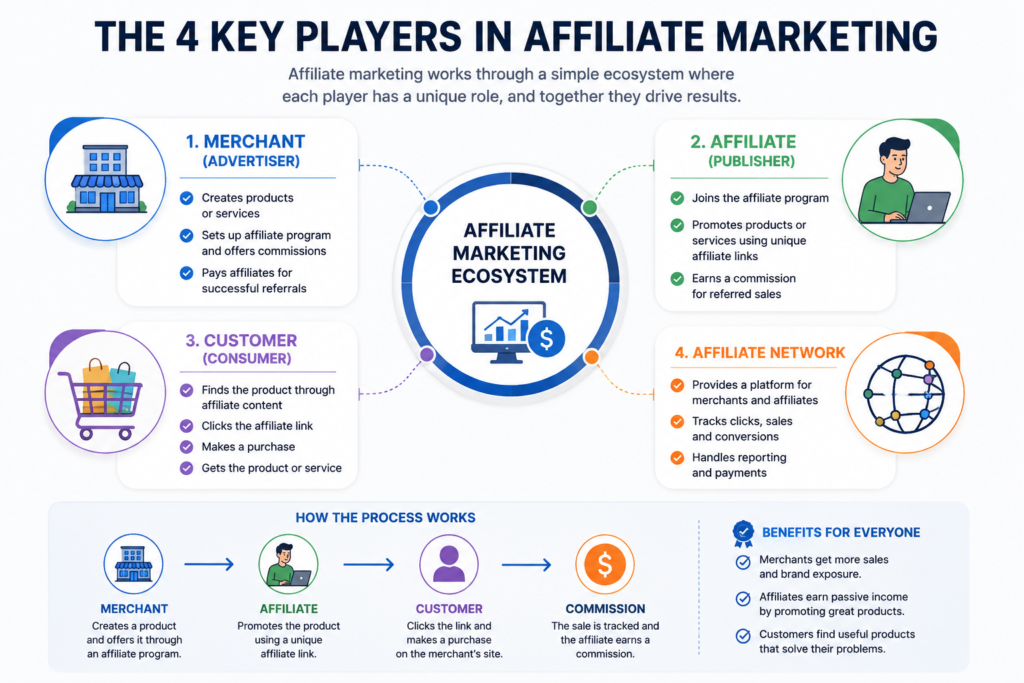
1. The Merchant (or Advertiser): This is the company or individual that creates the product or service. They want to sell more, and they’re willing to pay affiliates to help them achieve that.
2. The Affiliate (or Publisher): This is you. You promote the merchant’s products to your audience, whether through a website, social media, email list, or other channels. Your goal is to persuade potential customers to click your unique affiliate link and make a purchase.
3. The Consumer: This is the end-user who buys the product or service. They are often unaware they are purchasing through an affiliate link, or they may appreciate the affiliate’s recommendation.
4. The Affiliate Network: Many merchants use affiliate networks (like ShareASale, ClickBank, or Amazon Associates) to manage their affiliate programs. These networks act as intermediaries, providing tracking, reporting, and payment processing for both merchants and affiliates.
When a consumer clicks your affiliate link, a cookie is usually placed on their browser. This cookie tracks the consumer’s activity and attributes any subsequent purchase to your referral, ensuring you receive your commission.
How to Start Affiliate Marketing: A Step-by-Step Blueprint for Beginners
Embarking on an affiliate marketing journey requires a structured approach. Here’s a step-by-step blueprint for how to start affiliate marketing, designed specifically for those new to the field, making affiliate marketing for beginners accessible and actionable.
Step 1: Choosing Your Niche and Audience
The foundation of any successful affiliate marketing endeavor is selecting the right niche. This involves identifying a specific segment of the market with a defined interest or problem. To find the best affiliate niches, consider these factors:
• Your Passions and Expertise: Promoting products you genuinely understand and care about makes content creation easier and more authentic.
• Market Demand: Is there a real need or desire for products in this niche? Use tools like Google Trends or keyword research to gauge interest.
• Competition: While some competition indicates a viable market, overly saturated niches can be challenging for beginners. Look for areas where you can offer a unique perspective or target a specific sub-niche.
• Profitability: Are there enough products with decent commission rates available in this niche?
Once you have a niche, define your target audience within it. Understanding their demographics, pain points, and aspirations will guide your content and product recommendations.
Step 2: Finding and Joining Affiliate Programs
With your niche established, the next step is to find suitable products to promote. This involves researching and joining affiliate marketing programs for beginners. There are several avenues:
• Affiliate Networks: Platforms like Amazon Associates, ShareASale, ClickBank, CJ Affiliate (formerly Commission Junction), and Rakuten Advertising host thousands of programs across various niches. They provide a centralized dashboard for finding products, generating links, and tracking earnings.
• Direct Merchant Programs: Many companies run their own affiliate programs directly. You can often find these by searching a company’s website for terms like “affiliates,” “partners,” or “referral program.”
• Product-Specific Searches: If you have a particular product in mind, search for “[product name] affiliate program.”
When choosing programs, look for products that are high-quality, relevant to your audience, and offer fair commission rates. Read the terms and conditions carefully, especially regarding cookie duration and payment thresholds.
Step 3: Creating Valuable Content and Building Your Platform
To attract an audience and promote products effectively, you need a platform and valuable content. While a dedicated website (blog, review site) offers the most control and long-term potential, it’s possible to start affiliate marketing without a website.
• With a Website: A blog allows you to create in-depth reviews, comparison guides, tutorials, and informational articles. This builds authority and provides a stable home for your affiliate links.
• Without a Website:Social Media: Platforms like YouTube, Instagram, TikTok, or Facebook groups can be powerful. You can create video reviews, product demonstrations, or share helpful tips with embedded affiliate links (ensure compliance with platform rules and disclosure requirements).Email Marketing: Building an email list allows direct communication with your audience. You can send newsletters, product recommendations, and exclusive offers.Podcasts: If you enjoy audio, a podcast can be a great way to share insights and naturally integrate product mentions.
Regardless of your platform choice, the key is to create content that genuinely helps your audience. Focus on solving their problems, answering their questions, or entertaining them, rather than just pushing products.
Step 4: Driving Targeted Traffic to Your Offers
Even the best content won’t generate sales if no one sees it. Driving targeted traffic is essential:
• Search Engine Optimization (SEO): Optimize your website or content for search engines to rank higher for relevant keywords. This brings organic, highly motivated traffic.
• Social Media Marketing: Share your content on relevant social media platforms. Engage with your audience, participate in groups, and build a community.
• Email Marketing: Nurture your email list with valuable content and occasional product recommendations.
• Paid Advertising: Platforms like Google Ads, Facebook Ads, or Pinterest Ads can provide immediate, targeted traffic. This requires a budget and careful optimization to be profitable.
Focus on attracting an audience genuinely interested in your niche, as they are more likely to convert into customers.
Step 5: Analyzing Performance and Optimizing for Growth
Affiliate marketing is an iterative process. Regularly analyze your performance to understand what works and what doesn’t. Track metrics such as:
• Click-Through Rate (CTR): How many people click your affiliate links?
• Conversion Rate: How many clicks result in a sale?
• Earnings Per Click (EPC): How much do you earn on average for each click?
• Traffic Sources: Where is your audience coming from?
Use this data to optimize your content, calls to action, and traffic generation strategies. A/B test different approaches to continuously improve your results.
Top Affiliate Marketing Platforms for Beginners
Choosing the right platform can significantly impact your initial experience with affiliate marketing. Here are some popular affiliate marketing platforms that are generally beginner-friendly:
• Amazon Associates: Ideal for beginners due to its vast product catalog and high brand recognition. You can promote almost any product sold on Amazon. Commissions vary widely by product category.
• ShareASale: A large network with thousands of merchants across diverse niches, including fashion, home goods, and business services. It’s known for its user-friendly interface and reliable payments.
• ClickBank: Specializes in digital products (e-books, online courses, software) often with higher commission rates. It’s popular in niches like health, fitness, and self-help.
• CJ Affiliate (formerly Commission Junction): Another major network featuring programs from many well-known brands. It offers robust tracking and reporting tools.
• Rakuten Advertising: Connects affiliates with major retailers and brands, particularly strong in electronics, apparel, and travel.
• Impact.com: A growing platform that hosts programs for many direct-to-consumer brands and offers advanced tracking capabilities.
When selecting a platform, consider the relevance of its merchants to your niche, the commission structures, and the ease of use for tracking and payments.
Effective Affiliate Marketing Strategies for Beginners
Beyond the technical steps, successful affiliate marketing relies on strategic thinking. Here are some actionable affiliate marketing strategies for beginners to help you build a sustainable business:
Content-First Approach: Reviews, Guides, and Tutorials
Prioritize creating high-quality, informative content. Instead of simply listing products, provide value:
• In-depth Reviews: Offer honest, balanced reviews of products you’ve used or thoroughly researched. Highlight pros, cons, and who the product is best for.
• Comparison Guides: Help your audience choose between similar products by comparing features, pricing, and performance.
• “How-To” Tutorials: Show people how to use a product or solve a problem, naturally integrating the product as a solution.
• Problem/Solution Articles: Identify common pain points in your niche and recommend affiliate products as effective solutions.
This approach builds trust and positions you as an authority, making your recommendations more impactful.
Building an Email List for Long-Term Engagement
An email list is one of your most valuable assets. It provides a direct line of communication with your most engaged audience members. Offer a valuable incentive (e.g., a free guide, checklist, or mini-course) in exchange for email sign-ups. Use your email list to:
• Share new content and updates.
• Provide exclusive tips and insights.
• Promote relevant affiliate products through targeted campaigns.
• Build a stronger relationship with your audience over time.
Email marketing allows for repeated exposure to offers and can significantly increase conversion rates compared to one-off website visits.
Leveraging Social Media and Community Building
Social media platforms offer immense potential for reaching and engaging with your audience. Choose platforms where your target audience spends their time:
• YouTube: Create video reviews, unboxings, or tutorials.
• Instagram/TikTok: Visual content, short-form videos, product showcases.
• Facebook Groups/Reddit: Participate in niche-specific communities, offer genuine help, and occasionally share relevant affiliate content where appropriate and allowed.
Focus on building a community around your niche. Engage with comments, answer questions, and provide value consistently. This fosters trust, which is crucial for affiliate conversions.
Essential Affiliate Marketing Tips for Sustainable Success
Navigating the world of affiliate marketing requires patience and strategic thinking. Here are some practical affiliate marketing tips to help you build a sustainable and profitable business:
• Be Transparent: Always disclose your affiliate relationships. This builds trust with your audience and is often a legal requirement (e.g., FTC guidelines).
• Focus on Value First: Your primary goal should be to help your audience. If you provide genuine value, product recommendations will feel natural and be more effective.
• Promote Products You Believe In: Authenticity is key. Only recommend products you’ve used, researched thoroughly, or genuinely believe will benefit your audience.
• Patience and Persistence: Affiliate marketing is not a get-rich-quick scheme. It takes time to build an audience, create content, and see consistent results.
• Continuous Learning: The digital landscape changes rapidly. Stay updated on SEO, content marketing, social media trends, and affiliate program changes.
• Diversify Your Income Streams: As you grow, consider promoting products from multiple affiliate programs and even exploring other monetization methods (e.g., ads, your own digital products).
• Track Everything: Pay close attention to your analytics. Understand which content, products, and traffic sources are performing best.
Common Pitfalls to Avoid When Starting Affiliate Marketing
While the potential of affiliate marketing is significant, beginners often encounter common obstacles. Being aware of these can help you steer clear:
• Promoting Too Many Products: Overloading your audience with too many different offers can dilute your message and make you seem untrustworthy. Focus on a select few high-quality, relevant products.
• Neglecting Audience Needs: Focusing solely on commissions rather than solving your audience’s problems is a recipe for failure. Your content should always prioritize their needs.
• Lack of Disclosure: Failing to disclose affiliate relationships can erode trust and lead to legal issues. Always be upfront.
• Expecting Instant Results: Affiliate marketing requires consistent effort over time. Don’t get discouraged if you don’t see significant income immediately.
• Ignoring Analytics: Without tracking and analyzing your performance, you won’t know what’s working or how to improve.
• Copying Others: While it’s good to learn from successful affiliates, simply copying their content or approach won’t build your unique brand or authority. Find your own voice and perspective.
• Poor Quality Content: Shoddy content, whether written or video, will fail to engage your audience and build trust. Invest time in creating high-quality, helpful material.
Frequently Asked Questions About Affiliate Marketing for Beginners
How much money can I make with affiliate marketing?
Earnings vary widely. Some affiliates earn a few hundred dollars a month, while top performers can make six or even seven figures annually. Your income depends on your niche, audience size, traffic, conversion rates, and commission structures. It requires consistent effort and strategic optimization.
Is it too late to start affiliate marketing?
No, it’s not too late. While the market is competitive, new niches emerge, and audiences are always looking for fresh perspectives and valuable content. The key is to find your unique angle, build a loyal audience, and adapt to new trends.
Do I need a lot of money to start affiliate marketing?
You can start with a very low budget. Essential costs might include a domain name and web hosting (if you choose to build a website), or simply time if you leverage free social media platforms. Paid advertising requires a budget, but it’s not necessary to start.
How long does it take to see results in affiliate marketing?
Seeing significant results typically takes several months to a year, sometimes longer. Building an audience, establishing authority, and optimizing your strategies are processes that require patience and consistent effort. Expect a learning curve and gradual growth.
Conclusion: Your Journey into Affiliate Marketing Begins Now
Affiliate marketing for beginners offers a flexible and scalable path to online income. By understanding what is affiliate marketing, diligently following the steps on how to start affiliate marketing, and applying smart affiliate marketing strategies for beginners, you can build a thriving online business. Remember to choose your niche wisely, create genuinely valuable content, drive targeted traffic, and continuously analyze your performance. While challenges will arise, armed with the right knowledge and a commitment to consistent effort, your journey into affiliate marketing can lead to significant rewards. Take the first step today, stay persistent, and keep learning.