

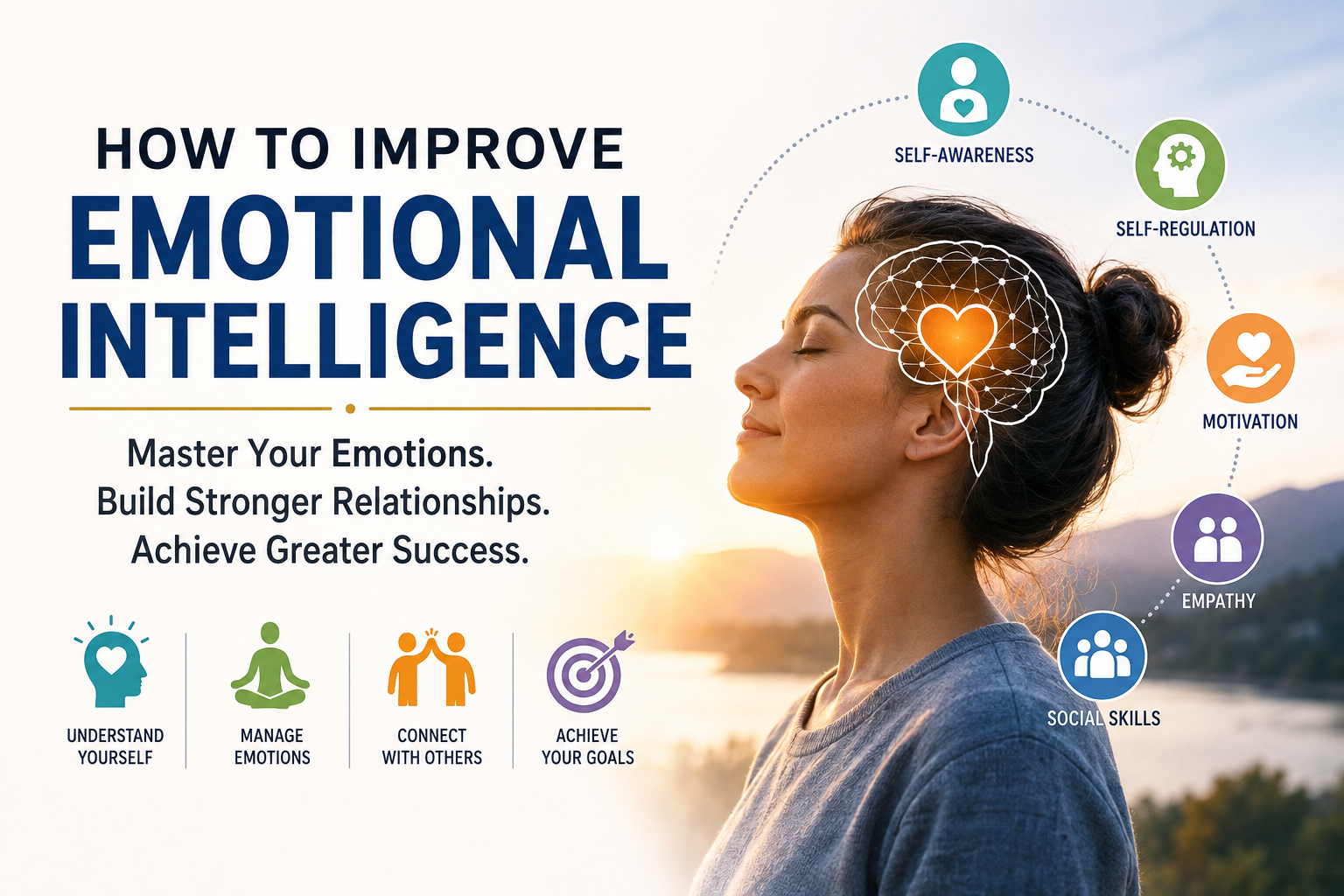
Emotional intelligence is not a single trait but a collection of interconnected abilities. Psychologist Daniel Goleman popularized a model that outlines five key components, often referred to as essential emotional intelligence skills. Understanding these components is the first step toward developing them.
Defining the Pillars of Emotional Intelligence
- Self-Awareness: The ability to recognize and understand your own emotions, moods, and drives, as well as their effect on others. This includes knowing your strengths and weaknesses.
- Self-Regulation: The capacity to control or redirect disruptive impulses and moods, and to think before acting. It involves managing your internal state.
- Motivation: A passion to work for reasons that go beyond money or status, and a propensity to pursue goals with energy and persistence.
- Empathy: The ability to understand the emotional makeup of other people. It involves sensing others’ feelings and perspectives, and taking an active interest in their concerns.
- Social Skills: Proficiency in managing relationships and building networks, and an ability to find common ground and build rapport.
The Neuroscience Behind Emotional Triggers: Understanding the Amygdala Hijack
To truly grasp how self-regulation works, it helps to look at the brain’s architecture. Coined by Daniel Goleman, the term “amygdala hijack” describes what happens when the amygdala the brain’s emotional alarm system—perceives an immediate threat (such as harsh criticism or an aggressive email) and overrides the rational prefrontal cortex. This triggers an instantaneous fight, flight, or freeze response before your logical brain has time to process the nuance of the event. Recognizing this biological delay explains why taking a physical pause or applying deep breathing allows the prefrontal cortex time to re-engage, turning a reflexive explosion into an intentional, measured response.
The Impact: Why High Emotional Intelligence Matters
The benefits of emotional intelligence extend across nearly every aspect of life. Individuals with high EI tend to experience improved mental health, stronger personal relationships, and greater job satisfaction. They are better equipped to handle stress, resolve conflicts constructively, and adapt to change. Professionally, high emotional intelligence correlates with leadership effectiveness, team cohesion, and career advancement, making it a highly valued attribute in the workplace.
Cultivating Self-Awareness: The Foundation of Emotional Growth
The journey to how to improve emotional intelligence begins with self-awareness. This foundational skill involves recognizing your emotions as they happen and understanding their origins and impact. Without this insight, efforts to manage or influence emotions are often less effective. Focusing on developing emotional awareness is crucial.
Techniques for Recognizing and Understanding Your Emotions
To enhance your self-awareness, consider these practical tips for emotional intelligence:
- Journaling: Regularly writing down your thoughts, feelings, and reactions to events can reveal patterns and triggers. Reflect on what caused certain emotions and how you responded.
- Mindfulness and Meditation: Practices that encourage present-moment awareness can help you observe your emotions without judgment, fostering a deeper understanding of your internal state.
- Seek Feedback: Ask trusted friends, family, or colleagues for honest feedback on how your emotions and behaviors impact them. This external perspective can provide valuable insights.
- Body Scan: Pay attention to physical sensations associated with different emotions. For example, tension in your shoulders might signal stress, or a racing heart might indicate anxiety.
- Emotional Granularity Practice: Move beyond generic labels like “bad” or “mad.” Use granular descriptors from psychological models like the Geneva Emotion Wheel (e.g., distinguishing between feeling “inadequate,” “dismissed,” or “overwhelmed”). Research by psychologist Dr. Lisa Feldman Barrett shows that accurately labeling emotions significantly reduces autonomic nervous system reactivity.
Mastering Your Reactions: Effective Self-Regulation
Once you are aware of your emotions, the next step in how to improve emotional intelligence is learning to manage them. Managing emotions effectively means responding thoughtfully rather than reacting impulsively. This involves developing robust self-regulation techniques.
Strategies for Managing Stress and Impulses
Here are some effective self-regulation techniques for managing emotions effectively:
- Take a Pause: Before responding to a challenging situation, take a few deep breaths. This brief pause can create space between stimulus and reaction, allowing for a more considered response.
- Cognitive Reframing: Challenge negative thoughts and perspectives. Instead of dwelling on what went wrong, try to find a different, more constructive interpretation of the situation.
- Stress Reduction Practices: Engage in activities that help you relax and de-stress, such as exercise, hobbies, or spending time in nature. Consistent stress management improves your capacity for self-regulation.
- Identify Triggers: Understand what situations or people tend to provoke strong emotional reactions in you. Once identified, you can develop strategies to navigate or avoid these triggers.
- The 90-Second Rule: Neuroanatomist Dr. Jill Bolte Taylor established that the chemical surge of an emotional response lasts approximately 90 seconds in the bloodstream. If you can pause, avoid rumination, and breathe for 90 seconds, the physiological trigger dissipates, leaving you free to choose a rational response.
- Implementation Intentions: Use predefined “If-Then” planning (e.g., “If I feel interrupted in a meeting, then I will silently take two slow exhalations before speaking”).
Building EConnecting Empathy and Social Skills
A significant aspect of how to improve emotional intelligence involves your interactions with others. This includes cultivating empathy and refining your social skills to foster stronger, more meaningful connections.
Practicing Active Listening and Perspective-Taking
To enhance empathy, consider these empathy building exercises:
- Active Listening: When someone speaks, focus entirely on their words, tone, and body language. Avoid interrupting or formulating your response while they are still talking. Reflect back what you hear to confirm understanding.
- Perspective-Taking: Consciously try to see situations from another person’s point of view. Ask yourself, “What might they be feeling? What are their motivations or concerns?” This helps you understand their emotional state.
- Read Fiction: Engaging with diverse characters and narratives can broaden your understanding of human experiences and emotions, indirectly boosting your empathy.
- Distinguish the Three Types of Empathy: Cognitive empathy (intellectually understanding someone’s point of view), emotional/affective empathy (feeling what they feel physically or emotionally), and compassionate empathy (taking active steps to support them). Practicing compassionate empathy prevents emotional burnout while maximizing constructive support.
Enhancing Communication and Relationship Management
Improving your social skills improvement is vital for effective interactions. These practical tips for emotional intelligence can help:
- Clear Communication: Express your thoughts and feelings clearly and respectfully. Use “I” statements to convey your perspective without blaming others.
- Non-Verbal Cues: Pay attention to your own body language and that of others. Maintain appropriate eye contact, use open gestures, and be aware of facial expressions.
- Conflict Resolution: Learn to approach disagreements constructively. Focus on finding solutions rather than assigning blame, and be willing to compromise.
- Build Rapport: Find common interests, offer genuine compliments, and remember details about people to build stronger connections.
How to Measure Your Emotional Intelligence: Diagnostic Tools
Evaluating your baseline emotional intelligence helps clarify specific growth areas. Validated assessment tools commonly utilized in psychological and executive settings include:
- (Mayer-Salovey-Caruso Emotional Intelligence Test) An ability-based test measuring how well you perform emotional tasks (e.g., identifying facial expressions, solving emotional dilemmas).
- (Emotional Quotient Inventory) A widely respected self-report assessment measuring interpersonal competencies, stress tolerance, and decision-making styles.
- 360-Degree EI Assessments: Multi-rater surveys where peers, managers, and subordinates evaluate your real-world communication and leadership behaviors.
Emotional Intelligence at Work: Professional Applications
The relevance of emotional intelligence extends significantly into professional environments. Understanding how to improve emotional intelligence can directly impact career trajectory and workplace dynamics. High EI is a cornerstone of effective leadership and collaborative teamwork.
Leadership, Teamwork, and Conflict Resolution
In the workplace, emotional intelligence at work manifests in several critical ways:
- Leadership: Emotionally intelligent leaders inspire trust, motivate teams, and navigate organizational change with greater ease. They understand their team’s emotional needs and can foster a positive work environment.
- Teamwork: Individuals with strong EI contribute to more cohesive and productive teams. They can manage interpersonal dynamics, resolve disagreements, and collaborate effectively towards shared goals.
- Conflict Resolution: EI enables individuals to approach conflicts calmly, understand underlying emotions, and facilitate constructive dialogue, leading to more favorable outcomes for all parties.
- Client Relations: Understanding client needs and emotions allows for better service delivery and stronger client relationships.
The SBI (Situation-Behavior-Impact) Feedback Framework
Emotionally intelligent leaders deliver difficult feedback without triggering defensive hostility by anchoring criticism in concrete observations:
- Situation: Anchor the specific time and place.
- Behavior: Describe observable actions without labeling character..
- Impact: Explain the objective outcome and emotional consequence.
Sustaining Growth: Continuous Emotional Intelligence Training
Developing emotional intelligence is an ongoing process, not a one-time achievement. Consistent effort and dedication to emotional intelligence training are essential for sustained growth.
Resources and Practices for Ongoing Development
To continue your journey on how to improve emotional intelligence, consider these resources and practical tips for emotional intelligence:
- Books and Articles: Read widely on emotional intelligence, psychology, and communication. Authors like Daniel Goleman, Brené Brown, and Adam Grant offer valuable insights.
- Workshops and Courses: Enroll in formal emotional intelligence training programs or workshops. Many organizations offer courses on leadership, communication, and emotional regulation.
- Coaching and Mentorship: Work with a coach or mentor who can provide personalized feedback, guidance, and accountability in your EI development.
- Daily Reflection: Dedicate a few minutes each day to reflect on your emotional experiences, interactions, and responses. What went well? What could have been handled differently?
- Practice Consistently: Apply the techniques discussed in this article regularly. Like any skill, emotional intelligence improves with consistent practice
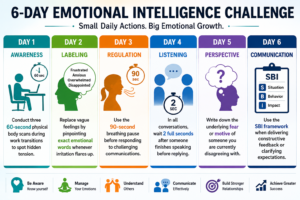
To turn EI theory into a daily routine, apply this progressive habit schedule:
- Day 1 (Awareness) Conduct three 60-second physical body scans during work transitions to spot hidden tension.
- Day 2 (Labeling): Replace vague feelings by pinpointing exact emotional words whenever irritation flares up.
- Day 3 (Regulation): Use the 90-second breathing pause before responding to challenging communications.
- Day 4 (Listening): In all conversations, wait 2 full seconds after someone finishes speaking before replying.
- Day 5 (Perspective): Write down the underlying fear or motive of someone you are currently disagreeing with.
- Day 6 (Communication): Use the SBI framework when delivering constructive feedback or clarifying expectations
Frequently Asked Questions About Improving Emotional Intelligence
Here are some common questions regarding how to improve emotional intelligence:
- Can emotional intelligence be learned? Yes, emotional intelligence is a set of skills that can be developed and improved over time with conscious effort and practice.
- How long does it take to improve emotional intelligence? The timeline varies for each individual, but consistent practice and self-reflection can lead to noticeable improvements within months, with ongoing development throughout life.
- Is emotional intelligence more important than IQ? While both are valuable, many experts argue that EI is a stronger predictor of success in personal relationships and career advancement than IQ alone.
- What are the signs of low emotional intelligence? Common signs include difficulty handling criticism, frequent defensive arguments, trouble reading non-verbal social cues, poor impulse control during disagreements, and an inability to understand why others feel upset.
- Can high emotional intelligence be faked or used negatively? While basic etiquette can be feigned, authentic EI requires internal self-awareness. When used without ethical motives, EI capabilities can border on interpersonal manipulation, which is why authentic empathy and psychological safety must guide these skills.
Conclusion: Your Journey to Enhanced Emotional Intelligence
Understanding how to improve emotional intelligence is a powerful step towards a more fulfilling and successful life. By focusing on self-awareness, mastering self-regulation, building empathy, and refining social skills, you can transform your interactions and decision-making. This journey requires continuous effort and practice, but the long-term benefits of emotional intelligence—from stronger relationships to greater professional achievement—make it a worthwhile endeavor. Begin applying these practical tips today and observe the positive changes unfold in your personal and professional spheres.