

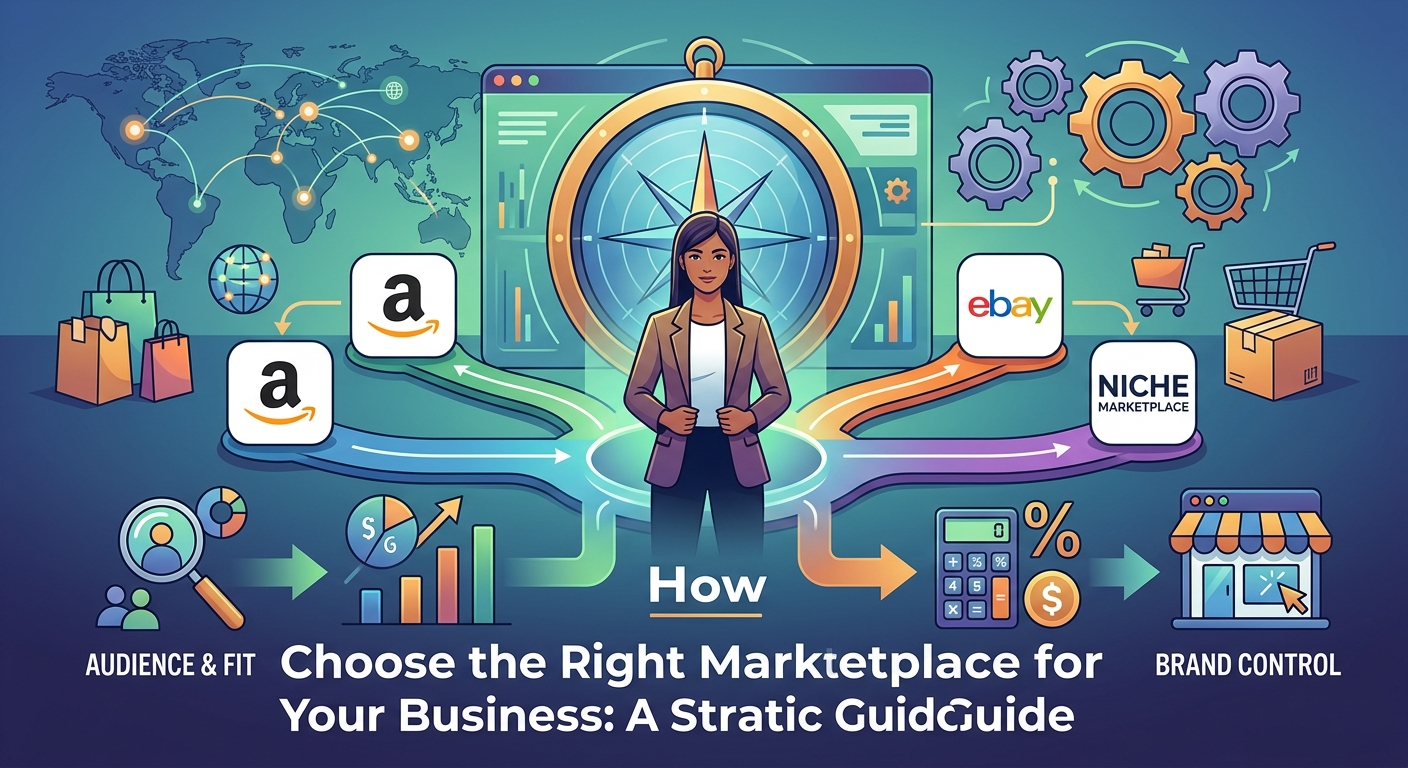
Understanding Your Business Needs Before Selecting a Marketplace
Before evaluating external platforms, a thorough internal assessment of your business is crucial. This foundational step ensures that any marketplace you consider aligns with your core operations and strategic direction.
Your Products, Target Audience, and Brand Identity
The nature of your products dictates which marketplaces are suitable. Are you selling handmade crafts, unique vintage items, mass-produced consumer goods, or digital products? Each category often thrives on different platforms. Similarly, identifying your target audience – their demographics, purchasing habits, and where they typically shop online – is paramount. A marketplace’s user base should ideally match your customer profile. Finally, consider your brand identity. Some marketplaces offer more control over branding and customer interaction than others. If maintaining a distinct brand image is critical, this will influence your choice.
Business Goals, Scalability, and Operational Capacity
A Practical Decision Framework for Choosing a Marketplace
Use the following sequence before committing to a platform. It turns the selection process into a measurable business decision rather than relying on popularity alone.
- Define the product-market fit: confirm that the marketplace allows your product category and serves buyers who actively purchase similar products.
- Estimate your economics: calculate expected selling fees, fulfillment, shipping, advertising, returns, and other operating costs before listing.
- Assess competition: search for comparable products, review the number and quality of competing listings, and identify how you can differentiate.
- Check operational requirements: review inventory synchronization, fulfillment options, customer-service expectations, returns, and seller performance requirements.
- Evaluate brand and customer ownership: determine how much control you have over your storefront, customer communication, and repeat-purchase strategy.
- Test before scaling: start with a limited product range, measure conversion and contribution margin, then expand only when the economics are sustainable.
What are your long-term business objectives? Are you looking for rapid growth, niche market penetration, or simply an additional sales channel? Your goals will help prioritize marketplace features. Evaluate the scalability of potential platforms; can they accommodate your growth plans in terms of inventory, sales volume, and international reach? Also, assess your current operational capacity, including staffing for order fulfillment, customer service, and inventory management. Some marketplaces offer robust fulfillment services, which can be a significant advantage for businesses with limited resources.
Key Ecommerce Marketplace Selection Criteria for Sellers
Once you understand your business’s internal landscape, you can begin to evaluate external platforms using specific ecommerce marketplace selection criteria. These are the essential factors to consider when choosing an an online marketplace.
Audience Reach, Demographics, and Niche Alignment
A marketplace’s audience is its most valuable asset. Research the platform’s total user base, their geographic distribution, and their typical purchasing behavior. Does this audience align with your target customer? For instance, a platform known for electronics might not be ideal for selling artisanal jewelry. Understanding the platform’s demographics ensures your products are visible to the right buyers.
Marketplace Fees Comparison: Understanding the Costs
One of the most significant considerations is the cost of selling. A thorough marketplace fees comparison is essential. Fees typically include:
- Listing Fees:A charge for placing an item for sale.
- Transaction Fees:A percentage of the sale price, often varying by product category.
- Subscription Fees:Monthly or annual fees for access to advanced seller tools or higher listing limits.
- Payment Processing Fees:Charges associated with handling customer payments.
- Advertising Fees:Optional costs for promoting your listings within the marketplace.
The quality of seller tools and support can greatly affect your operational efficiency. Look for platforms that offer intuitive seller dashboards, robust analytics to track sales and performance, and reliable customer support for sellers. Ease of use for managing listings, inventory, and orders is also a critical factor, especially for businesses with limited technical staff.
Competition, Saturation, and Brand Control
Assess the level of competition for similar products on each marketplace. High saturation can make it challenging to stand out. Consider the degree of brand control the marketplace allows. Some platforms prioritize their own brand over individual sellers, limiting your ability to build direct customer relationships or customize your storefront. This can be a significant drawback if brand building is a key objective.
To illustrate the differences, let’s look at a brief marketplace comparison for sellers across some of the best online marketplaces for small business and larger enterprises.
Selling on Amazon: The Global E-commerce Giant
Amazon offers unparalleled reach and a massive customer base. It’s ideal for businesses selling mass-market products, especially those that can leverage its Fulfillment by Amazon (FBA) services for storage, packing, and shipping. However, competition is intense, and sellers have less brand control. Understanding the nuances of selling on Amazon vs Etsy vs eBay reveals Amazon’s focus on efficiency and scale, often at the expense of seller individuality.
Selling on Etsy: The Hub for Handmade and Vintage
Etsy caters to artisans, crafters, and sellers of vintage items. It boasts a community-driven environment and a strong focus on unique, handmade goods. For businesses whose products fit this niche, Etsy offers a highly engaged audience and a platform that supports creative branding. Fees are generally lower than Amazon, making it an attractive option for smaller, specialized businesses. When considering selling on Amazon vs Etsy vs eBay, Etsy stands out for its distinct niche and creative freedom.
Selling on eBay: The Auction and Fixed-Price Veteran
eBay provides flexibility for selling both new and used items, with options for auction-style listings or fixed-price sales. It has a global reach and a diverse customer base, appealing to a wide range of product categories. eBay offers more branding opportunities than Amazon and can be a good choice for unique items, collectibles, or businesses looking to clear inventory. In the context of selling on Amazon vs Etsy vs eBay, eBay offers a middle ground in terms of product type and seller control.
Exploring Niche Marketplaces: Specialized Opportunities
Quick Marketplace Comparison for Sellers
The table below is a practical starting point. The right platform depends on product category, target audience, fees, fulfillment needs, and the level of brand control required.
| Marketplace | Common Fit | Key Strength | Main Consideration |
| Amazon | Mass-market and standardized products | Large customer reach and fulfillment options | High competition and comparatively limited brand control |
| Etsy | Handmade, vintage, and creative products | Strong niche audience and creative storefront environment | Category fit and transaction/processing costs matter |
| eBay | New, used, collectibles, and varied inventory | Flexible listing formats and broad product coverage | Fees vary by category and seller setup |
| Niche marketplace | Specialized products or audiences | Targeted buyers and potentially less direct competition | Smaller audience and platform-specific rules |
Beyond the major players, specialized platforms offer unique advantages.
Advantages of Specialization and Targeted Audiences
Niche marketplace benefits include less competition, higher conversion rates, and a more engaged, pre-qualified audience. These platforms are built around specific product categories (e.g., fashion, electronics, art, sustainable goods), meaning buyers visiting these sites are actively looking for what you sell. This can lead to more efficient marketing and stronger customer loyalty.
Identifying the Right Niche Platform for Your Business
Researching niche marketplaces involves identifying platforms that cater directly to your product category or target demographic. Look for industry-specific directories, forums, and communities. Evaluate their seller terms, fee structures, and the size and activity level of their user base to ensure they offer a viable sales channel.
Pros and Cons of Selling on Marketplaces
Understanding the general pros and cons of selling on marketplaces helps contextualize your decision.
Advantages of Marketplace Selling
- Built-in Audience:Access to millions of potential customers without significant marketing investment.
- Reduced Marketing Effort:Marketplaces handle much of the customer acquisition.
- Established Trust:Buyers often trust established marketplaces, which can benefit new sellers.
- Simplified Logistics:Many platforms offer fulfillment services, simplifying shipping and returns.
- Lower Barrier to Entry:Easier and faster to set up than building an independent e-commerce site.
Disadvantages and Considerations for Sellers
- Fees and Costs:Various fees can erode profit margins.
- Intense Competition:Standing out can be challenging among many sellers.
- Limited Brand Control:Less ability to customize your storefront or build direct customer relationships.
- Platform Dependency:Your business is subject to the marketplace’s rules, algorithm changes, and policies.
- Lack of Direct Customer Data:Marketplaces often control customer data, limiting your ability to conduct targeted marketing or build loyalty programs.
Marketplace Selection Checklist
- My products are permitted and appropriate for the marketplace.
- The marketplace audience matches my target customer.
- I have calculated all major selling, payment, fulfillment, shipping, advertising, and return costs.
- My expected contribution margin remains acceptable after marketplace costs.
- I understand the marketplace’s seller policies, performance requirements, and return rules.
- I have a plan for inventory, fulfillment, customer service, and order management.
- I understand the level of brand control and customer-data access available to sellers.
- I have compared at least two relevant marketplaces instead of choosing only on brand recognition.
Frequently Asked Questions About Choosing an Online Marketplace
Can I sell on multiple marketplaces?
Yes, many businesses successfully sell on multiple platforms to diversify their reach and revenue streams. However, this requires careful inventory management and order fulfillment strategies to avoid overselling or logistical issues.
What’s the most cost-effective marketplace?
The most cost-effective marketplace depends entirely on your product type, sales volume, and business model. Platforms with lower listing fees might have higher transaction fees, or vice versa. A detailed fee comparison based on your projected sales is necessary.
How do I start selling on a marketplace?
Typically, you’ll need to create a seller account, provide business and payment information, list your products with descriptions and images, and set up your shipping preferences. Each marketplace has specific onboarding steps and requirements.
Conculsion
Choosing the right online marketplace is a strategic decision that requires a comprehensive understanding of your business, your products, and your target audience. By carefully evaluating ecommerce marketplace selection criteria, conducting a thorough marketplace fees comparison, and considering the unique characteristics of platforms like Amazon, Etsy, and eBay, you can align your sales channels with your business goals. Whether you opt for a broad platform or a specialized niche marketplace, thorough research and strategic planning are key to determining how to choose the right marketplace for your business and ensuring a successful e-commerce journey.