

Intoduction
Understanding the true value of an item or service is a fundamental skill, whether you are buying, selling, seeking insurance, or simply satisfying personal curiosity. The question, “How much is it worth?” can have complex answers, as value is rarely a single, fixed number. Instead, it’s a dynamic concept influenced by numerous factors and perspectives. This guide provides a structured approach to valuation, helping you navigate the intricacies of assessing worth for both tangible assets and intangible services.
Defining Value: What is Market Value and Beyond?
Before attempting to determine an item’s monetary worth, it’s crucial to understand the different types of value that exist. While many terms are used interchangeably, each carries a distinct meaning, especially when considering transactions or financial planning. Our primary focus for most transactions will be on what is market value, but other definitions provide important context.
Market Value Explained
Market value represents the most probable price an asset would fetch in a competitive and open market, under all conditions requisite to a fair sale, with the buyer and seller each acting prudently, knowledgeably, and typically uninfluenced by undue stimulus. It’s the price at which a willing buyer and a willing seller would agree, assuming neither is under compulsion to buy or sell, and both have reasonable knowledge of relevant facts. This definition is central to understanding what influences an item’s worth in a transactional context.
Beyond market value, other forms of value include:
- Intrinsic Value: The inherent worth of an asset, often based on its utility, materials, or fundamental characteristics, independent of market fluctuations.
- Sentimental Value: The emotional worth an item holds for an individual, which is subjective and not typically quantifiable in monetary terms for market transactions.
- Replacement Value: The cost to replace an item with a new one of similar kind and quality, often used for insurance purposes.
- Liquidation Value: The price an asset would bring in a forced or quick sale, typically lower than market value.
Key Factors Influencing an Item’s Worth
Many elements contribute to an item’s final valuation. Recognizing these factors affecting value is essential for anyone looking to understand what influences an item’s worth, whether it’s a collectible, a piece of real estate, or a used appliance.
Condition and Rarity
For many items, particularly collectibles, antiques, and electronics, physical condition is paramount. An item in pristine, original condition will almost always command a higher price than one that is damaged, worn, or incomplete. Rarity also plays a significant role. Scarce items, especially those with limited production runs or few surviving examples, often have elevated values due to their exclusivity. The combination of excellent condition and high rarity can dramatically increase an item’s worth.
Demand, Supply, and Market Trends
The basic economic principles of supply and demand heavily dictate what is market value. If an item is highly sought after (high demand) but few are available (low supply), its value will likely increase. Conversely, an abundance of an item with little interest will depress its price. Current market trends, fads, and cultural relevance can also cause significant fluctuations. For example, vintage video games or specific fashion items can experience surges in demand based on nostalgia or celebrity endorsement, temporarily inflating their value.
Provenance and Authenticity
For high-value goods such as art, antiques, historical artifacts, and luxury items, provenance (the documented history of ownership) and verifiable authenticity are critical factors affecting value. A clear, unbroken chain of ownership from a notable collector or a reputable source can significantly enhance an item’s credibility and worth. Certificates of authenticity, expert opinions, and historical records are often required to confirm an item’s legitimacy and prevent counterfeits from devaluing genuine pieces.
Brand, Age, and Utility
Brand reputation often correlates with perceived quality and desirability, influencing an item’s value. A well-known, respected brand typically commands a higher price. The impact of age varies significantly by item type: for antiques and fine wines, age can increase value, while for electronics and vehicles, it generally leads to depreciation. An item’s utility, or practical usefulness, also contributes to its worth. A functional tool or a practical piece of furniture holds value based on its ability to serve its intended purpose, alongside other aesthetic or historical considerations.
Modern AI & Visual Search Tools: Instant Valuation Methods
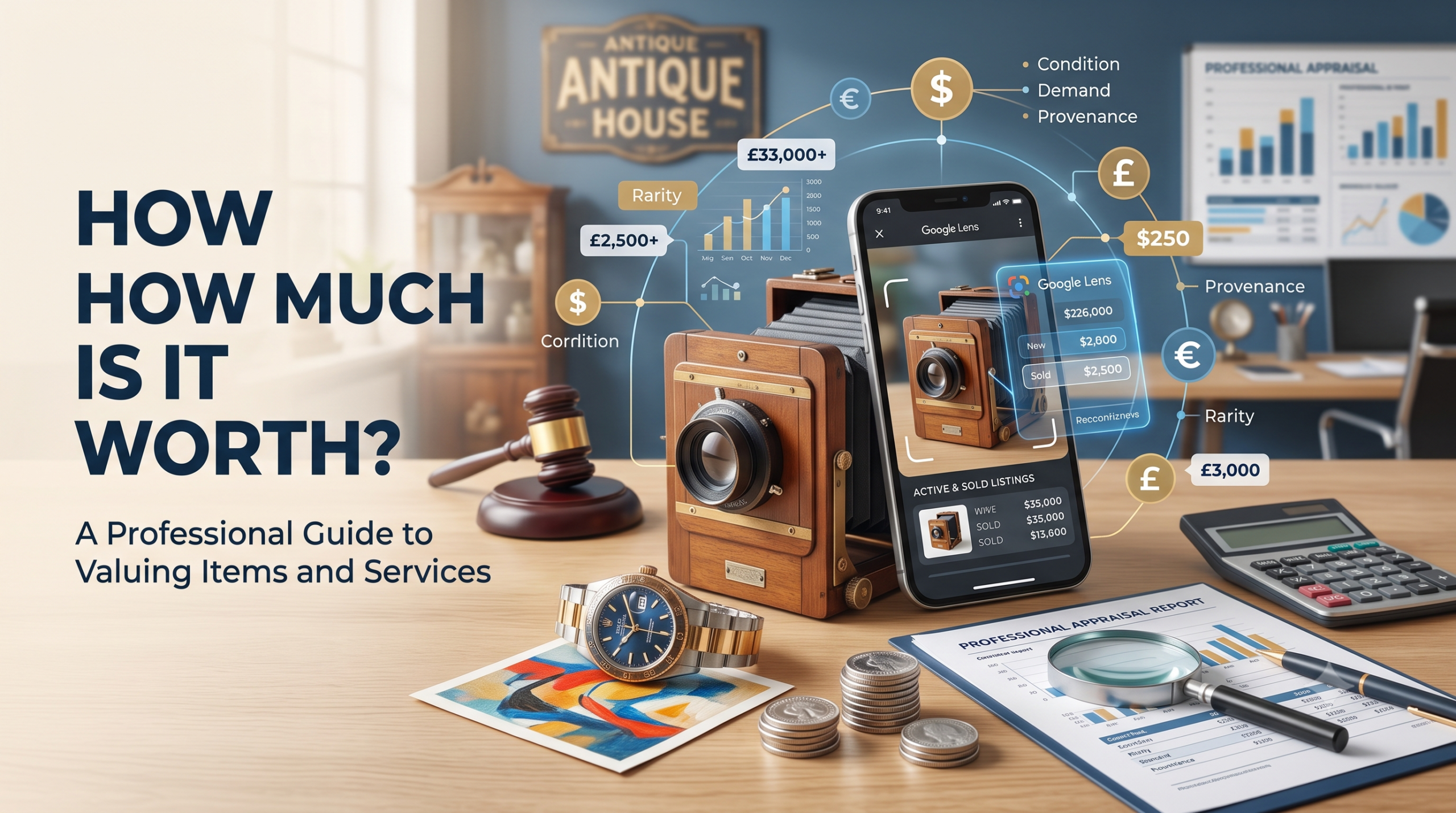
In addition to traditional valuation models, modern AI tools allow users to instantly answer ‘how much is it worth’ using mobile camera technology and computer vision algorithms. Top valuation workflows now leverage these quick lookup tools:
- Google Lens & Visual Search: Take a photo of any item (furniture, art, obscure tools) to locate exact active and historical listings across global marketplaces within seconds.
- AI Valuation Apps (PriceSnap, ValueScout): Specialized mobile applications scan item barcodes or physical contours to instantly cross-reference sold database pricing.
- eBay Image Recognition Search: The eBay mobile application features an integrated image camera search that automatically filters by ‘Completed & Sold Items’ to show realistic market clearing prices.

Practical Approaches: How to Value Items and Determine Fair Price
For individuals seeking to understand the worth of their possessions without immediately engaging professional services, several practical methods can help how to value items and how to determine fair price.
Online Research and Comparative Sales Analysis
One of the most accessible methods involves thorough online research. Websites like eBay (filtering for “sold listings”), specialized auction house archives (e.g., Sotheby’s, Christie’s), and online marketplaces (e.g., Etsy for handmade goods, Reverb for musical instruments) provide a wealth of comparative sales data. By searching for items identical or highly similar to yours, you can identify recent transaction prices. Focus on completed sales rather than active listings, as asking prices do not always reflect actual selling prices. This method is crucial for understanding current market sentiment.
How to Analyze ‘Sold Listings’ vs. ‘Active Listings’ (Step-by-Step)
A common mistake beginners make when determining ‘how much is it worth’ is relying on ‘asking prices’ (active listings). Anyone can list an item for $1,000, but it is only worth what a buyer actually pays. Follow this 4-step framework:
- Step 1: Search Exact Specs – Enter the exact brand, model number, color, or serial number into the marketplace search bar.
- Step 2: Filter by Sold Comps – On platforms like eBay, Mercari, or Poshmark, scroll down the side filter menu and check ‘Sold Items’ and ‘Completed Items’.
- Step 3: Evaluate Recency & Outliers – Look for sales within the last 30 to 90 days. Ignore outliers (extremely high or low sales caused by bundled shipping or auctions).
- Step 4: Calculate Net Clearing Value – Take the average price of the 5 most recent sold listings in similar condition. Deduct expected marketplace fees (10%-15%) and shipping costs to establish your net realistic value.
Utilizing Resale Value Guides and Databases
For certain categories, published resale value guides and online databases offer standardized pricing information. Examples include:
- For vehicles: Kelley Blue Book (KBB), Edmunds, and NADAguides provide estimated trade-in, private party, and retail values based on make, model, year, mileage, and condition.
- For collectibles: Specialized guides exist for coins, stamps, comic books, sports cards, and other memorabilia. These often provide grading standards and corresponding values.
- For electronics: Websites like Gazelle or Swappa offer instant quotes for used phones, tablets, and laptops.
These resources are excellent starting points for how to value items within their respective categories.
Expert Consultation and Informal Opinions
For items where online data is scarce or complex, seeking informal opinions from knowledgeable individuals can be beneficial. This might include speaking with local antique dealers, specialized collectors, or reputable shop owners. While these opinions are not formal appraisals, they can provide a preliminary estimate and guide you on whether further professional valuation is warranted. Always seek multiple opinions if possible to get a balanced perspective.
Master Valuation Matrix: Best Valuation Tools by Category
To streamline your valuation process, use this cross-category quick reference table to match your specific asset with top industry-standard appraisal databases:
| Item Category | Primary Valuation Source / Tool | Key Metrics Analyzed |
| Antiques & Fine Art | WorthPoint, Sotheby’s Archives, LiveAuctioneers | Maker’s Mark, Provenance, Historical Auction Results |
| Used Consumer Electronics | Swappa, Gazelle, eBay Sold Filter | Battery Health, Storage Size, Cosmetic Grade (Mint vs. Fair) |
| Trading Cards & Collectibles | PSA Financial Price Guide, TCGplayer, PriceCharting | Professional Grade (PSA/BGS 1-10), First Edition Stamps |
| Vehicles & Automotive | Kelley Blue Book (KBB), Edmunds, Bring a Trailer | Mileage, Title Status, Trim Package, Service Records |
| Digital Businesses & Domains | Flippa, Empire Flippers, GoDaddy Appraisal | Monthly Net Profit (SDE), Organic Traffic, Revenue Multiple |
Professional Appraisal Services: When and How to Get an Item Appraised
While informal methods are useful for general understanding, certain situations necessitate a formal, documented appraisal. Understanding appraisal services cost and the process for how to get an item appraised is vital for these scenarios.
Scenarios Requiring a Formal Appraisal
A professional appraisal provides an unbiased, documented opinion of value by a qualified expert. You typically need one for:
- Insurance: To ensure adequate coverage for valuable items against loss, theft, or damage.
- Estate Planning and Probate: To determine the value of assets for inheritance taxes and equitable distribution among heirs.
- Divorce Settlements: To fairly divide marital property.
- Charitable Donations: For tax deduction purposes for non-cash contributions exceeding certain thresholds.
- Significant Sales or Purchases: To establish a fair asking price or confirm the value of an item you intend to buy.
- Loan Collateral: When using valuable assets as security for a loan.
Understanding Appraisal Services Cost
The cost of appraisal services varies based on the appraiser’s expertise, the complexity of the item(s), the amount of research required, and the geographic location. Appraisers typically charge in one of three ways:
- Hourly Rate: Common for complex items or collections requiring extensive research. Rates can range from $100 to $300+ per hour.
- Flat Fee: A set price for appraising a specific item or a small group of items. This is often quoted upfront.
- Per Item Fee: A fixed charge for each item appraised, suitable for larger collections of similar items.
It is crucial to note that ethical appraisers do not charge a percentage of the item’s appraised value. This practice creates a conflict of interest, as it incentivizes the appraiser to inflate the value. Always confirm the fee structure upfront and ensure it is not percentage-based when considering appraisal services cost.
The Appraisal Process
The process for how to get an item appraised generally involves these steps:
1. Select a Qualified Appraiser: Look for appraisers certified by recognized professional organizations (e.g., Appraisers Association of America, American Society of Appraisers) who specialize in your item’s category.
2. Initial Consultation: Discuss your needs, the item(s) to be appraised, and the purpose of the appraisal. The appraiser will explain their fees and process.
3. Examination and Research: The appraiser will physically examine the item, document its condition, dimensions, and any distinguishing marks. They will then conduct extensive research, consulting databases, auction records, and expert opinions to establish value.
4. Report Generation: A formal appraisal report is prepared, detailing the item’s description, condition, methodology used, market analysis, and the final valuation. This report is a legally recognized document.
5. Delivery and Discussion: You receive the report, and the appraiser may discuss their findings with you.
Estimating Value for Specific Categories
While general principles apply, specific categories of items have unique considerations when trying to how to value items.
Collectibles (Art, Antiques, Coins, Stamps)
When you estimate value of collectibles, factors like rarity, condition (often graded on a specific scale), provenance, and current market demand are paramount. For art, the artist’s reputation, period, medium, and exhibition history are vital. For antiques, age, craftsmanship, historical significance, and originality are key. Always consult specialized guides and experts in these fields.
Real Estate and Vehicles
For real estate, valuation typically involves a Comparative Market Analysis (CMA) by a real estate agent or a formal appraisal by a licensed appraiser. This considers recent sales of comparable properties, location, condition, and market trends. For vehicles, as mentioned, resources like Kelley Blue Book or Edmunds provide estimated values based on make, model, year, mileage, condition, and features. These are essential tools for understanding their worth.
Jewelry and Precious Metals
Valuing jewelry involves assessing the precious metals (gold, silver, platinum) by weight and purity, and gemstones by their carat weight, cut, color, clarity, and origin. Current spot prices for metals fluctuate daily and significantly impact value. For antique or designer jewelry, craftsmanship, brand, and historical significance also contribute to the overall worth.
Valuing Digital Assets & Online Businesses
Modern valuations frequently involve intangible digital assets. If you are assessing ‘how much is it worth’ for a domain, website, or online store, unique digital metrics apply:
- Monthly Earnings Multiples: Online businesses are typically valued on a multiple of Seller’s Discretionary Earnings (SDE) or EBITDA. Most small-to-medium websites sell for 30x to 45x their monthly net profit.
- Traffic Quality & SEO Multiples: High organic search traffic from Google holds significantly higher value than paid social ad traffic due to long-term sustainability.
- Domain Name Appraisal: Short, brandable .com domains with exact match search volume carry premium aftermarket value regardless of website development.
How to Price Services Effectively
Unlike tangible goods, services are intangible, making their valuation unique. Understanding how to price services and how to determine fair price for your expertise requires a different approach.
Factors in Service Pricing
Several elements influence service pricing:
- Experience and Expertise: Highly experienced and specialized professionals can command higher rates.
- Market Rates: Researching what competitors charge for similar services provides a benchmark.
- Overhead Costs: Business expenses (rent, software, insurance, marketing) must be covered.
- Perceived Value: How much value the client believes they will receive from the service.
- Client Budget: Understanding what your target clients are willing and able to pay.
- Time and Effort: The amount of time and resources required to deliver the service.
Common Service Pricing Models
When considering how to price services, several models are prevalent:
- Hourly Rates: Charging a fixed rate per hour of work. Simple but can penalize efficiency.
- Project-Based Fees: A fixed price for an entire project, regardless of hours. Favored by clients for predictability.
- Retainer Models: A recurring fee for ongoing access to services or a set amount of work per period.
- Value-Based Pricing: Pricing based on the perceived value or results delivered to the client, rather than just time or cost. This often allows for higher profitability.
Maximizing Resale Value
Whether you plan to sell an item soon or in the distant future, taking steps to preserve and enhance its worth can significantly impact its eventual selling price. This is a key aspect of any effective resale value guide.
Maintenance and Documentation
Regular maintenance and proper storage are crucial for preserving an item’s condition. For electronics, keeping original packaging, manuals, and accessories can add value. For all items, retaining receipts, warranties, certificates of authenticity, and any service records provides essential documentation that verifies ownership, authenticity, and care, making it easier to justify a higher price.
Effective Presentation and Marketing
When it’s time to sell, how you present your item matters. Clean the item thoroughly but carefully. Take high-quality, well-lit photographs from multiple angles, highlighting both condition and unique features. Write a clear, honest, and detailed description, including any flaws. Accurate and appealing presentation can attract more buyers and help you achieve the best possible price, aligning with principles found in any good resale value guide.
Frequently Asked Questions About Item Valuation
Here are answers to common questions about item valuation:
Q: Can I appraise my own items?
A: While you can research and estimate the value of your items, you cannot conduct a formal, legally recognized appraisal of your own possessions. A formal appraisal requires an independent, qualified third party to ensure objectivity and credibility.
Q: What’s the difference between an appraisal and an estimate?
A: An estimate is an informal, often verbal, opinion of value, usually based on general knowledge or quick comparison. An appraisal is a formal, written document prepared by a qualified professional, based on thorough research and established methodologies, and is legally defensible.
Q: How often should I get items appraised?
A: For insurance purposes, it’s generally recommended to update appraisals every 3-5 years, or sooner if there are significant market fluctuations for your specific item type, or if the item’s condition changes. For estate planning, appraisals are typically done at the time of death.
Q: Is sentimental value considered in appraisals?
A: No, formal appraisals focus on objective market value. Sentimental value, while important to the owner, is subjective and not quantifiable in monetary terms for market transactions or legal purposes.
Q: How do I find out how much an item is worth using a photo?
A: You can use visual search technology like Google Lens or eBay Image Search. Take a clear, well-lit photograph of the item, upload it to the visual search tool, and review identical active and sold listings across the web.
Q: Why is an item’s asking price different from its market value?
A: An asking price represents a seller’s wishful thinking or starting negotiation point, whereas market value represents what a buyer actually paid in a completed transaction. Always use ‘Sold’ comps rather than listed prices.
Conclusion
The question of “How much is it worth?” is multifaceted, requiring a thoughtful and informed approach. From understanding what is market value to recognizing the diverse factors affecting value, and from learning how to value items through practical research to engaging professional appraisal services, the journey to accurate valuation is varied. Whether you are looking to sell a collectible, insure a family heirloom, or simply understand the assets you possess, a clear grasp of valuation principles empowers you to make sound financial and personal decisions. By utilizing available resources and knowing when to seek expert help, you can confidently determine a fair price and navigate the complexities of worth.