

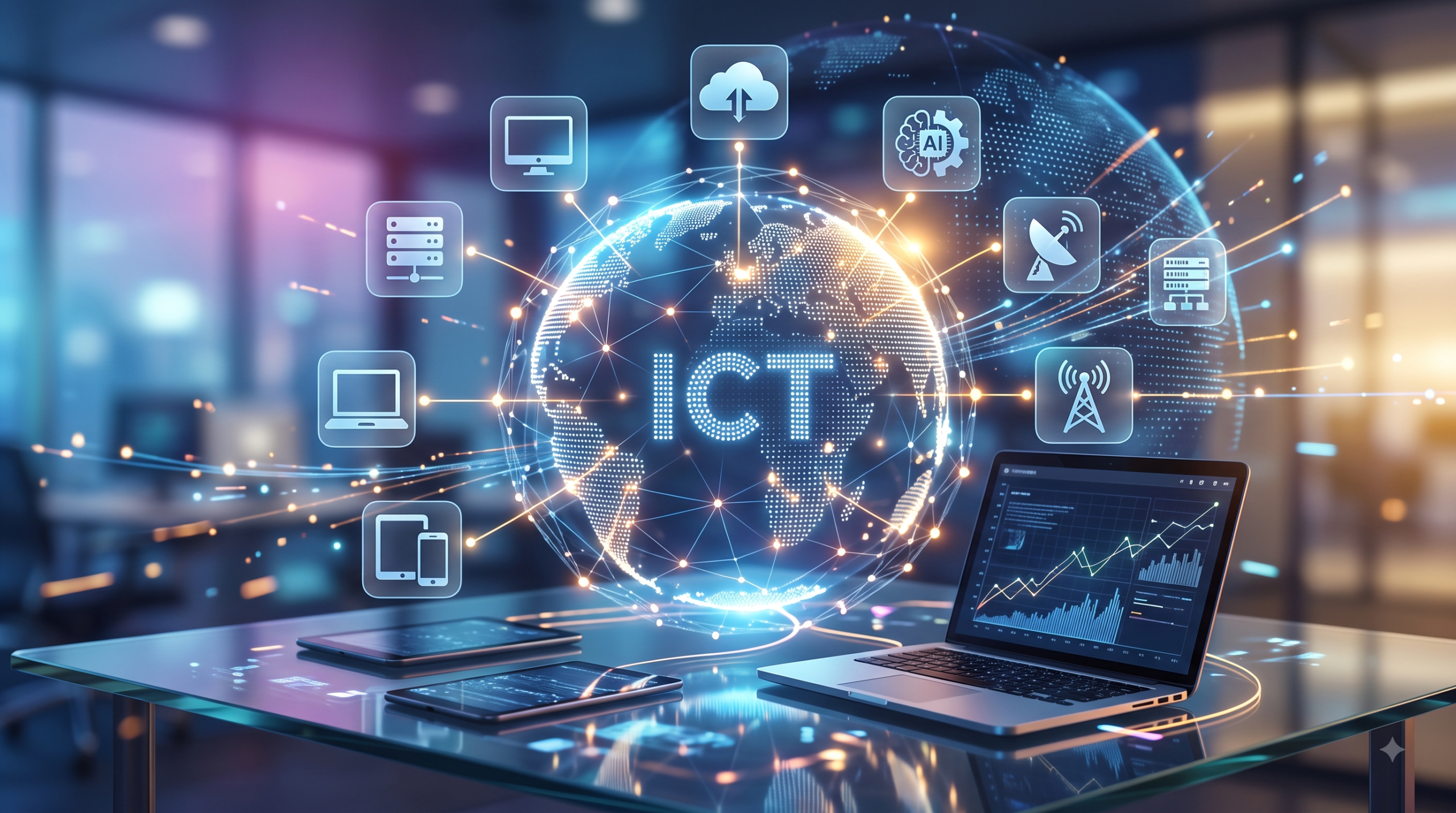
Information and Communication Technology (ICT) refers to a broad and comprehensive term encompassing all technologies used to handle information and aid communication. This includes not only traditional computing hardware and software but also the vast array of communication technologies, such as the internet, wireless networks, and telecommunications. Essentially, what is ICT boils down to the infrastructure and components that enable modern computing and digital communication. It represents the integration of information processing, storage, and retrieval with the means to transmit and exchange that information across distances, bridging the gap between data and its dissemination.
Defining the Core Components of ICT
To fully grasp what is ICT, it’s helpful to break it down into its fundamental elements:
• Hardware: Physical components like computers, servers, smartphones, tablets, networking equipment (routers, switches), and peripherals (printers, scanners).
• Software: Programs and applications that run on hardware, including operating systems (Windows, macOS, Linux), productivity suites (Microsoft Office, Google Workspace), enterprise applications (ERP, CRM), and mobile apps.
• Services: The provision of ICT capabilities, such as internet service providers (ISPs), cloud computing services (SaaS, PaaS, IaaS), telecommunication services, and managed IT services.
• Infrastructure: The underlying framework that supports ICT, including data centers, network cabling, wireless transmission towers, and satellite systems.
These components interact seamlessly to create the robust systems that define modern information and communication technology.
The Evolution of Information and Communication Technology
The journey of information and communication technology is a testament to rapid innovation. Its roots can be traced back to early computing devices and the invention of the telephone. Key milestones include the development of the transistor, the creation of the internet in the late 20th century, and the subsequent mobile revolution driven by smartphones and wireless technologies. Each phase has built upon the last, leading to increasingly powerful, interconnected, and accessible systems. This continuous evolution underscores the dynamic nature of what is ICT and its ongoing transformation of global capabilities.
Key Examples of Information and Communication Technology
The breadth of information and communication technology is best illustrated through concrete examples of ICT that permeate various aspects of life and business. These examples showcase the diverse applications and underlying technologies that constitute this field.
Hardware and Infrastructure Examples
The physical backbone of ICT includes:
• Computers and Servers: From personal laptops and desktops to powerful data center servers that store and process vast amounts of information.
• Smartphones and Tablets: Mobile devices that combine computing power with communication capabilities, serving as primary access points for many digital services.
• Networking Equipment: Routers, switches, firewalls, and modems that facilitate data transfer and connectivity across local and global networks.
• Data Centers: Facilities housing networked computer servers and storage systems, crucial for cloud computing and enterprise operations.
These are fundamental ICT tools and applications that enable digital operations.
Software and Application Examples
Software brings hardware to life and provides functionality:
• Operating Systems: Software like Windows, macOS, Android, and iOS that manage computer hardware and software resources.
• Productivity Suites: Applications such as Microsoft Office (Word, Excel, PowerPoint) or Google Workspace (Docs, Sheets, Slides) used for daily tasks.
• Enterprise Resource Planning (ERP) Systems: Integrated software solutions that manage core business processes like finance, HR, and supply chain.
• Mobile Applications: A vast ecosystem of apps for communication, entertainment, productivity, and specialized services on smartphones and tablets.
These examples of ICT demonstrate the diverse ways software enhances user experience and organizational efficiency.
Communication Networks and Services
Connectivity is a cornerstone of information and communication technology:
• The Internet: The global system of interconnected computer networks that uses the Internet protocol suite (TCP/IP) to link billions of devices worldwide.
• Wireless Technologies: Wi-Fi for local area networking, and cellular networks (4G, 5G) for mobile communication and data access.
• Telecommunication Services: Voice calls, SMS, and data services provided by carriers.
• Satellite Communication: Used for remote areas, global broadcasting, and specialized applications like GPS.
These networks are critical examples of ICT that enable real-time global interaction.
The Role of ICT in Daily Life
Information and communication technology has profoundly integrated into and transformed nearly every aspect of human existence. Its pervasive presence means that ICT in daily life is no longer a luxury but a fundamental component of modern living and working.
Personal Use and Connectivity
For individuals, ICT facilitates:
• Social Media: Platforms like Facebook, Instagram, and Twitter connect people globally, enabling sharing and interaction.
• Online Shopping: E-commerce websites and apps provide convenient access to goods and services from anywhere.
• Entertainment Streaming: Services such as Netflix, Spotify, and YouTube deliver on-demand content directly to devices.
• Personal Communication: Email, instant messaging apps (WhatsApp, Telegram), and video calls keep individuals connected with friends and family.
These applications highlight how ICT in daily life enhances personal convenience and social interaction.
Business Operations and Innovation
Businesses leverage ICT for significant advantages:
• E-commerce: Online storefronts and digital payment systems enable global trade and customer reach.
• Remote Work: Collaboration tools and cloud platforms support distributed teams and flexible work arrangements.
• Supply Chain Management: ICT optimizes logistics, inventory tracking, and supplier coordination, leading to greater efficiency.
• Digital Marketing: Targeted advertising, social media campaigns, and analytics drive customer engagement and sales.
The benefits of information technology are evident in these streamlined and innovative business processes.
Education and Learning
ICT has revolutionized educational paradigms:
• E-learning Platforms: Online courses, virtual learning environments (VLEs), and massive open online courses (MOOCs) provide flexible learning opportunities.
• Digital Resources: Access to online libraries, educational videos, and interactive simulations enriches the learning experience.
• Virtual Classrooms: Video conferencing tools enable remote instruction and collaborative learning regardless of geographical barriers.
This integration makes education more accessible and engaging, demonstrating the transformative power of information and communication technology.
Healthcare and Public Services
ICT enhances critical services:
• Telemedicine: Remote consultations, diagnostics, and monitoring improve access to healthcare, especially in underserved areas.
• Electronic Health Records (EHR): Digital patient records streamline administration, improve care coordination, and reduce errors.
• Smart City Initiatives: ICT-driven solutions for traffic management, waste collection, public safety, and energy efficiency improve urban living.
These applications underscore the significant impact of ICT on society by improving public welfare and service delivery.
Essential ICT Tools and Applications
A closer look at specific ICT tools and applications reveals the practical ways information and communication technology empowers individuals and organizations.
Collaboration and Communication Platforms
Modern work and social interactions rely heavily on these tools:
• Video Conferencing: Platforms like Zoom, Microsoft Teams, and Google Meet enable face-to-face communication across distances.
• Instant Messaging: Tools such as Slack, WhatsApp Business, and internal chat systems facilitate quick, informal communication.
• Project Management Software: Applications like Asana, Trello, and Jira help teams plan, track, and execute projects efficiently.
These ICT tools and applications are central to fostering teamwork and maintaining connectivity.
Data Management and Analytics Systems
Leveraging data is a key advantage provided by ICT:
• Databases: Systems like SQL and NoSQL databases store and organize vast amounts of information for quick retrieval.
• Business Intelligence (BI) Tools: Software that analyzes business data to provide actionable insights for decision-making.
• Big Data Analytics Platforms: Technologies designed to process and analyze extremely large and complex datasets, revealing patterns and trends.
These systems are crucial for realizing the full benefits of information technology through data-driven strategies.
Cloud Computing and Artificial Intelligence
These advanced technologies are reshaping the ICT landscape:
• Cloud Services: Infrastructure as a Service (IaaS), Platform as a Service (PaaS), and Software as a Service (SaaS) offer scalable, on-demand computing resources and applications over the internet.
• Artificial Intelligence (AI) and Machine Learning (ML): Algorithms and systems that enable machines to learn from data, perform tasks typically requiring human intelligence, and automate complex processes.
Cloud and AI are powerful ICT tools and applications that drive innovation and efficiency across industries.
The Impact of Information and Communication Technology on Society
The widespread adoption of information and communication technology has brought about profound changes, creating a significant impact of ICT on society across various dimensions.
Economic Growth and Development
ICT is a powerful engine for economic progress:
• Job Creation: The ICT sector itself generates numerous employment opportunities, from software development to network administration.
• Increased Productivity: Automation and efficient communication tools enhance output across all industries.
• Global Market Access: Businesses, regardless of size, can reach international customers and suppliers, fostering global trade.
These contributions highlight the substantial benefits of information technology in driving economic prosperity.
Social Connectivity and Cultural Exchange
ICT has transformed human interaction:
• Global Communication: Instant messaging, video calls, and social media platforms enable real-time communication across geographical boundaries.
• Cultural Understanding: Access to diverse media, news, and perspectives fosters greater awareness and appreciation of different cultures.
• Community Building: Online forums and social groups allow individuals with shared interests to connect and collaborate.
This enhanced connectivity is a core aspect of the positive impact of ICT on society.
Challenges and Ethical Considerations
Despite its advantages, ICT also presents challenges:
• Digital Divide: Disparities in access to ICT resources and skills can exacerbate social and economic inequalities.
• Privacy Concerns: The collection and use of personal data raise questions about individual privacy and data security.
• Cybersecurity Risks: The interconnected nature of ICT makes systems vulnerable to cyberattacks, requiring robust protection measures.
• Ethical Use of AI: The development and deployment of artificial intelligence raise ethical dilemmas regarding bias, accountability, and job displacement.
Addressing these issues is critical for ensuring the responsible and equitable development of information and communication technology.
Benefits of Information Technology and ICT Adoption
Embracing information and communication technology offers a multitude of advantages for individuals, businesses, and governments. The benefits of information technology are far-reaching, underscoring the immense importance of ICT in the modern world.
Enhanced Efficiency and Productivity
ICT streamlines operations and boosts output:
• Automation: Repetitive tasks can be automated, freeing up human resources for more complex activities.
• Streamlined Processes: Digital workflows and integrated systems reduce manual effort and errors.
• Faster Communication: Instantaneous information exchange accelerates decision-making and project execution.
These improvements directly contribute to higher productivity and operational excellence.
Improved Access to Information and Knowledge
One of the most significant benefits of information technology is the democratization of knowledge:
• Global Information Access: The internet provides unparalleled access to vast repositories of data, research, and educational content.
• Learning Opportunities: Online courses, tutorials, and digital libraries make continuous learning accessible to everyone.
• Informed Decision-Making: Ready access to data and analytics supports better choices in personal and professional contexts.
This widespread access highlights the profound importance of ICT in empowering individuals and societies.
Fostering Innovation and Problem-Solving
ICT provides the tools and platforms necessary for groundbreaking advancements:
• Research and Development: Advanced computing power and data analysis capabilities accelerate scientific discovery and technological innovation.
• Collaborative Platforms: ICT enables global teams to work together on complex problems, fostering diverse perspectives and solutions.
• Creative Tools: Software for design, media production, and simulation empowers creativity and new forms of expression.
The ability of information and communication technology to drive innovation is a cornerstone of its value.
Frequently Asked Questions About Information and Communication Technology
Understanding information and communication technology often involves clarifying common queries.
What is the primary difference between IT and ICT?
While often used interchangeably, IT (Information Technology) primarily focuses on the technology used to manage information, including computers, software, and data storage. What is ICT, on the other hand, is a broader term that encompasses IT along with communication technologies like telecommunications, the internet, and wireless networks. ICT emphasizes the role of communication in information exchange, making it a more comprehensive concept.
How does ICT contribute to sustainable development?
ICT plays a crucial role in sustainable development by enabling environmental monitoring, optimizing resource management (e.g., smart grids for energy efficiency), facilitating remote work to reduce carbon footprints, and providing platforms for education and awareness on sustainability issues. Its ability to collect, analyze, and disseminate information is vital for achieving the United Nations’ Sustainable Development Goals, highlighting the significant impact of ICT on society and its importance of ICT for global challenges.
What are the future trends in Information and Communication Technology?
Future trends in information and communication technology include the continued expansion of the Internet of Things (IoT), where everyday objects are interconnected; advancements in Artificial Intelligence and Machine Learning leading to more sophisticated automation and insights; the emergence of quantum computing promising unprecedented processing power; and the development of immersive technologies like the metaverse and extended reality (XR). These trends will further integrate ICT tools and applications into every facet of life and industry.
Conclusion
Information and Communication Technology (ICT) stands as a foundational pillar of the modern world, seamlessly integrating computing and communication to drive progress across all sectors. We have explored what is ICT, examining its core components and historical evolution. Through numerous examples of ICT, we’ve seen its tangible presence in hardware, software, and networks. The pervasive nature of ICT in daily life, from personal connectivity to business innovation, education, and public services, underscores its transformative power. Furthermore, the discussion of essential ICT tools and applications, alongside the profound impact of ICT on society, highlights its role in economic growth, social connectivity, and the challenges it presents. Ultimately, the multifaceted benefits of information technology, including enhanced efficiency, improved access to knowledge, and fostered innovation, firmly establish the indispensable importance of ICT in shaping our present and future.
Practical ICT Implementation Checklist
• Define the organization’s communication, data, and workflow requirements before selecting technology.
• Assess security, privacy, reliability, scalability, compatibility, and ongoing support requirements.
• Provide user training and establish clear responsibilities for system access, maintenance, backups, and incident response.
• Measure the results of ICT adoption using practical indicators such as time saved, service quality, productivity, availability, and user satisfaction.
Expert Insight: Choosing ICT Based on Business Needs
A useful ICT decision should begin with the problem being solved rather than with the technology itself. Organizations should compare options according to functionality, total cost, security, integration, scalability, and the skills required to operate the system.
For example, a small organization may prioritize simple cloud-based collaboration and communication tools, while a larger organization may need stronger identity management, centralized administration, integration between business systems, and formal governance. This needs-based approach helps prevent unnecessary technology spending and improves long-term usability.
Measuring the Success of ICT Adoption
• Productivity: Has the technology reduced repetitive work or improved workflow speed?
• Reliability: Are systems and services consistently available when users need them?
• Security: Are access controls, backups, updates, and incident-response procedures working effectively?
• User adoption: Can employees, students, customers, or other users successfully use the technology?
• Business or service outcomes: Has the ICT investment improved communication, service delivery, decision-making, or operational efficiency?
ICT Governance, Maintenance, and Continuous Improvement
ICT is not a one-time purchase. Hardware, software, networks, cloud services, and security controls require ongoing maintenance, monitoring, updates, user support, and periodic review. Organizations should also document important systems, define who is responsible for them, and review whether technology continues to meet changing operational needs.
A continuous-improvement approach can help organizations identify outdated systems, security weaknesses, unnecessary costs, and emerging requirements before they become larger operational problems.
Additional Frequently Asked Questions About ICT
What are the main areas of ICT?
The main areas include computing hardware and software, communication networks, telecommunications, internet services, cloud computing, data management, cybersecurity, and digital communication tools. These areas often work together as part of an ICT environment.
Why is cybersecurity important in ICT?
ICT systems store, process, and transmit information, so protecting systems and data is essential. Security practices such as access control, software updates, backups, monitoring, and user awareness can reduce exposure to common risks.
How can a small business start using ICT effectively?
A small business can begin by identifying its most important communication, data, customer-service, and workflow needs. It can then select practical tools that fit its budget and skills, establish basic security and backup practices, train users, and review the results over time.
What is the difference between ICT tools and ICT infrastructure?
ICT tools are technologies that users or organizations employ to perform specific tasks, such as collaboration, communication, data analysis, or productivity. ICT infrastructure is the underlying environment that supports those tools, including networks, servers, connectivity, data centers, and related systems.Information and Communication Technology (ICT) represents the convergence of information technology with communication methods, creating a powerful ecosystem that underpins modern society. From the simplest daily interactions to complex global operations, information and communication technology is an indispensable force shaping how we live, work, and connect. This article explores the fundamental nature of ICT, provides concrete examples, examines its pervasive role in daily life, highlights essential tools, analyzes its societal impact, and outlines the significant benefits it offers. Understanding this dynamic field is crucial for anyone seeking to comprehend the mechanisms driving contemporary progress and connectivity.
What is Information and Communication Technology (ICT)?
Information and Communication Technology (ICT) refers to a broad and comprehensive term encompassing all technologies used to handle information and aid communication. This includes not only traditional computing hardware and software but also the vast array of communication technologies, such as the internet, wireless networks, and telecommunications. Essentially, what is ICT boils down to the infrastructure and components that enable modern computing and digital communication. It represents the integration of information processing, storage, and retrieval with the means to transmit and exchange that information across distances, bridging the gap between data and its dissemination.
Defining the Core Components of ICT
To fully grasp what is ICT, it’s helpful to break it down into its fundamental elements:
• Hardware: Physical components like computers, servers, smartphones, tablets, networking equipment (routers, switches), and peripherals (printers, scanners).
• Software: Programs and applications that run on hardware, including operating systems (Windows, macOS, Linux), productivity suites (Microsoft Office, Google Workspace), enterprise applications (ERP, CRM), and mobile apps.
• Services: The provision of ICT capabilities, such as internet service providers (ISPs), cloud computing services (SaaS, PaaS, IaaS), telecommunication services, and managed IT services.
• Infrastructure: The underlying framework that supports ICT, including data centers, network cabling, wireless transmission towers, and satellite systems.
These components interact seamlessly to create the robust systems that define modern information and communication technology.
The Evolution of Information and Communication Technology
The journey of information and communication technology is a testament to rapid innovation. Its roots can be traced back to early computing devices and the invention of the telephone. Key milestones include the development of the transistor, the creation of the internet in the late 20th century, and the subsequent mobile revolution driven by smartphones and wireless technologies. Each phase has built upon the last, leading to increasingly powerful, interconnected, and accessible systems. This continuous evolution underscores the dynamic nature of what is ICT and its ongoing transformation of global capabilities.
Key Examples of Information and Communication Technology
The breadth of information and communication technology is best illustrated through concrete examples of ICT that permeate various aspects of life and business. These examples showcase the diverse applications and underlying technologies that constitute this field.
Hardware and Infrastructure Examples
The physical backbone of ICT includes:
• Computers and Servers: From personal laptops and desktops to powerful data center servers that store and process vast amounts of information.
• Smartphones and Tablets: Mobile devices that combine computing power with communication capabilities, serving as primary access points for many digital services.
• Networking Equipment: Routers, switches, firewalls, and modems that facilitate data transfer and connectivity across local and global networks.
• Data Centers: Facilities housing networked computer servers and storage systems, crucial for cloud computing and enterprise operations.
These are fundamental ICT tools and applications that enable digital operations.
Software and Application Examples
Software brings hardware to life and provides functionality:
• Operating Systems: Software like Windows, macOS, Android, and iOS that manage computer hardware and software resources.
• Productivity Suites: Applications such as Microsoft Office (Word, Excel, PowerPoint) or Google Workspace (Docs, Sheets, Slides) used for daily tasks.
• Enterprise Resource Planning (ERP) Systems: Integrated software solutions that manage core business processes like finance, HR, and supply chain.
• Mobile Applications: A vast ecosystem of apps for communication, entertainment, productivity, and specialized services on smartphones and tablets.
These examples of ICT demonstrate the diverse ways software enhances user experience and organizational efficiency.
Communication Networks and Services
Connectivity is a cornerstone of information and communication technology:
• The Internet: The global system of interconnected computer networks that uses the Internet protocol suite (TCP/IP) to link billions of devices worldwide.
• Wireless Technologies: Wi-Fi for local area networking, and cellular networks (4G, 5G) for mobile communication and data access.
• Telecommunication Services: Voice calls, SMS, and data services provided by carriers.
• Satellite Communication: Used for remote areas, global broadcasting, and specialized applications like GPS.
These networks are critical examples of ICT that enable real-time global interaction.
The Role of ICT in Daily Life
Information and communication technology has profoundly integrated into and transformed nearly every aspect of human existence. Its pervasive presence means that ICT in daily life is no longer a luxury but a fundamental component of modern living and working.
Personal Use and Connectivity
For individuals, ICT facilitates:
• Social Media: Platforms like Facebook, Instagram, and Twitter connect people globally, enabling sharing and interaction.
• Online Shopping: E-commerce websites and apps provide convenient access to goods and services from anywhere.
• Entertainment Streaming: Services such as Netflix, Spotify, and YouTube deliver on-demand content directly to devices.
• Personal Communication: Email, instant messaging apps (WhatsApp, Telegram), and video calls keep individuals connected with friends and family.
These applications highlight how ICT in daily life enhances personal convenience and social interaction.
Business Operations and Innovation
Businesses leverage ICT for significant advantages:
• E-commerce: Online storefronts and digital payment systems enable global trade and customer reach.
• Remote Work: Collaboration tools and cloud platforms support distributed teams and flexible work arrangements.
• Supply Chain Management: ICT optimizes logistics, inventory tracking, and supplier coordination, leading to greater efficiency.
• Digital Marketing: Targeted advertising, social media campaigns, and analytics drive customer engagement and sales.
The benefits of information technology are evident in these streamlined and innovative business processes.
Education and Learning
ICT has revolutionized educational paradigms:
• E-learning Platforms: Online courses, virtual learning environments (VLEs), and massive open online courses (MOOCs) provide flexible learning opportunities.
• Digital Resources: Access to online libraries, educational videos, and interactive simulations enriches the learning experience.
• Virtual Classrooms: Video conferencing tools enable remote instruction and collaborative learning regardless of geographical barriers.
This integration makes education more accessible and engaging, demonstrating the transformative power of information and communication technology.
Healthcare and Public Services
ICT enhances critical services:
• Telemedicine: Remote consultations, diagnostics, and monitoring improve access to healthcare, especially in underserved areas.
• Electronic Health Records (EHR): Digital patient records streamline administration, improve care coordination, and reduce errors.
• Smart City Initiatives: ICT-driven solutions for traffic management, waste collection, public safety, and energy efficiency improve urban living.
These applications underscore the significant impact of ICT on society by improving public welfare and service delivery.
Essential ICT Tools and Applications
A closer look at specific ICT tools and applications reveals the practical ways information and communication technology empowers individuals and organizations.
Collaboration and Communication Platforms
Modern work and social interactions rely heavily on these tools:
• Video Conferencing: Platforms like Zoom, Microsoft Teams, and Google Meet enable face-to-face communication across distances.
• Instant Messaging: Tools such as Slack, WhatsApp Business, and internal chat systems facilitate quick, informal communication.
• Project Management Software: Applications like Asana, Trello, and Jira help teams plan, track, and execute projects efficiently.
These ICT tools and applications are central to fostering teamwork and maintaining connectivity.
Data Management and Analytics Systems
Leveraging data is a key advantage provided by ICT:
• Databases: Systems like SQL and NoSQL databases store and organize vast amounts of information for quick retrieval.
• Business Intelligence (BI) Tools: Software that analyzes business data to provide actionable insights for decision-making.
• Big Data Analytics Platforms: Technologies designed to process and analyze extremely large and complex datasets, revealing patterns and trends.
These systems are crucial for realizing the full benefits of information technology through data-driven strategies.
Cloud Computing and Artificial Intelligence
These advanced technologies are reshaping the ICT landscape:
• Cloud Services: Infrastructure as a Service (IaaS), Platform as a Service (PaaS), and Software as a Service (SaaS) offer scalable, on-demand computing resources and applications over the internet.
• Artificial Intelligence (AI) and Machine Learning (ML): Algorithms and systems that enable machines to learn from data, perform tasks typically requiring human intelligence, and automate complex processes.
Cloud and AI are powerful ICT tools and applications that drive innovation and efficiency across industries.
The Impact of Information and Communication Technology on Society
The widespread adoption of information and communication technology has brought about profound changes, creating a significant impact of ICT on society across various dimensions.
Economic Growth and Development
ICT is a powerful engine for economic progress:
• Job Creation: The ICT sector itself generates numerous employment opportunities, from software development to network administration.
• Increased Productivity: Automation and efficient communication tools enhance output across all industries.
• Global Market Access: Businesses, regardless of size, can reach international customers and suppliers, fostering global trade.
These contributions highlight the substantial benefits of information technology in driving economic prosperity.
Social Connectivity and Cultural Exchange
ICT has transformed human interaction:
• Global Communication: Instant messaging, video calls, and social media platforms enable real-time communication across geographical boundaries.
• Cultural Understanding: Access to diverse media, news, and perspectives fosters greater awareness and appreciation of different cultures.
• Community Building: Online forums and social groups allow individuals with shared interests to connect and collaborate.
This enhanced connectivity is a core aspect of the positive impact of ICT on society.
Challenges and Ethical Considerations
Despite its advantages, ICT also presents challenges:
• Digital Divide: Disparities in access to ICT resources and skills can exacerbate social and economic inequalities.
• Privacy Concerns: The collection and use of personal data raise questions about individual privacy and data security.
• Cybersecurity Risks: The interconnected nature of ICT makes systems vulnerable to cyberattacks, requiring robust protection measures.
• Ethical Use of AI: The development and deployment of artificial intelligence raise ethical dilemmas regarding bias, accountability, and job displacement.
Addressing these issues is critical for ensuring the responsible and equitable development of information and communication technology.
Benefits of Information Technology and ICT Adoption
Embracing information and communication technology offers a multitude of advantages for individuals, businesses, and governments. The benefits of information technology are far-reaching, underscoring the immense importance of ICT in the modern world.
Enhanced Efficiency and Productivity
ICT streamlines operations and boosts output:
• Automation: Repetitive tasks can be automated, freeing up human resources for more complex activities.
• Streamlined Processes: Digital workflows and integrated systems reduce manual effort and errors.
• Faster Communication: Instantaneous information exchange accelerates decision-making and project execution.
These improvements directly contribute to higher productivity and operational excellence.
Improved Access to Information and Knowledge
One of the most significant benefits of information technology is the democratization of knowledge:
• Global Information Access: The internet provides unparalleled access to vast repositories of data, research, and educational content.
• Learning Opportunities: Online courses, tutorials, and digital libraries make continuous learning accessible to everyone.
• Informed Decision-Making: Ready access to data and analytics supports better choices in personal and professional contexts.
This widespread access highlights the profound importance of ICT in empowering individuals and societies.
Fostering Innovation and Problem-Solving
ICT provides the tools and platforms necessary for groundbreaking advancements:
• Research and Development: Advanced computing power and data analysis capabilities accelerate scientific discovery and technological innovation.
• Collaborative Platforms: ICT enables global teams to work together on complex problems, fostering diverse perspectives and solutions.
• Creative Tools: Software for design, media production, and simulation empowers creativity and new forms of expression.
The ability of information and communication technology to drive innovation is a cornerstone of its value.
Frequently Asked Questions About Information and Communication Technology
Understanding information and communication technology often involves clarifying common queries.
What is the primary difference between IT and ICT?
While often used interchangeably, IT (Information Technology) primarily focuses on the technology used to manage information, including computers, software, and data storage. What is ICT, on the other hand, is a broader term that encompasses IT along with communication technologies like telecommunications, the internet, and wireless networks. ICT emphasizes the role of communication in information exchange, making it a more comprehensive concept.
How does ICT contribute to sustainable development?
ICT plays a crucial role in sustainable development by enabling environmental monitoring, optimizing resource management (e.g., smart grids for energy efficiency), facilitating remote work to reduce carbon footprints, and providing platforms for education and awareness on sustainability issues. Its ability to collect, analyze, and disseminate information is vital for achieving the United Nations’ Sustainable Development Goals, highlighting the significant impact of ICT on society and its importance of ICT for global challenges.
What are the future trends in Information and Communication Technology?
Future trends in information and communication technology include the continued expansion of the Internet of Things (IoT), where everyday objects are interconnected; advancements in Artificial Intelligence and Machine Learning leading to more sophisticated automation and insights; the emergence of quantum computing promising unprecedented processing power; and the development of immersive technologies like the metaverse and extended reality (XR). These trends will further integrate ICT tools and applications into every facet of life and industry.
Conclusion
Information and Communication Technology (ICT) stands as a foundational pillar of the modern world, seamlessly integrating computing and communication to drive progress across all sectors. We have explored what is ICT, examining its core components and historical evolution. Through numerous examples of ICT, we’ve seen its tangible presence in hardware, software, and networks. The pervasive nature of ICT in daily life, from personal connectivity to business innovation, education, and public services, underscores its transformative power. Furthermore, the discussion of essential ICT tools and applications, alongside the profound impact of ICT on society, highlights its role in economic growth, social connectivity, and the challenges it presents. Ultimately, the multifaceted benefits of information technology, including enhanced efficiency, improved access to knowledge, and fostered innovation, firmly establish the indispensable importance of ICT in shaping our present and future.
Practical ICT Implementation Checklist
• Define the organization’s communication, data, and workflow requirements before selecting technology.
• Assess security, privacy, reliability, scalability, compatibility, and ongoing support requirements.
• Provide user training and establish clear responsibilities for system access, maintenance, backups, and incident response.
• Measure the results of ICT adoption using practical indicators such as time saved, service quality, productivity, availability, and user satisfaction.
Expert Insight: Choosing ICT Based on Business Needs
A useful ICT decision should begin with the problem being solved rather than with the technology itself. Organizations should compare options according to functionality, total cost, security, integration, scalability, and the skills required to operate the system.
For example, a small organization may prioritize simple cloud-based collaboration and communication tools, while a larger organization may need stronger identity management, centralized administration, integration between business systems, and formal governance. This needs-based approach helps prevent unnecessary technology spending and improves long-term usability.
Measuring the Success of ICT Adoption
• Productivity: Has the technology reduced repetitive work or improved workflow speed?
• Reliability: Are systems and services consistently available when users need them?
• Security: Are access controls, backups, updates, and incident-response procedures working effectively?
• User adoption: Can employees, students, customers, or other users successfully use the technology?
• Business or service outcomes: Has the ICT investment improved communication, service delivery, decision-making, or operational efficiency?
ICT Governance, Maintenance, and Continuous Improvement
ICT is not a one-time purchase. Hardware, software, networks, cloud services, and security controls require ongoing maintenance, monitoring, updates, user support, and periodic review. Organizations should also document important systems, define who is responsible for them, and review whether technology continues to meet changing operational needs.
A continuous-improvement approach can help organizations identify outdated systems, security weaknesses, unnecessary costs, and emerging requirements before they become larger operational problems.
Additional Frequently Asked Questions About ICT
What are the main areas of ICT?
The main areas include computing hardware and software, communication networks, telecommunications, internet services, cloud computing, data management, cybersecurity, and digital communication tools. These areas often work together as part of an ICT environment.
Why is cybersecurity important in ICT?
ICT systems store, process, and transmit information, so protecting systems and data is essential. Security practices such as access control, software updates, backups, monitoring, and user awareness can reduce exposure to common risks.
How can a small business start using ICT effectively?
A small business can begin by identifying its most important communication, data, customer-service, and workflow needs. It can then select practical tools that fit its budget and skills, establish basic security and backup practices, train users, and review the results over time.
What is the difference between ICT tools and ICT infrastructure?
ICT tools are technologies that users or organizations employ to perform specific tasks, such as collaboration, communication, data analysis, or productivity. ICT infrastructure is the underlying environment that supports those tools, including networks, servers, connectivity, data centers, and related systems.