

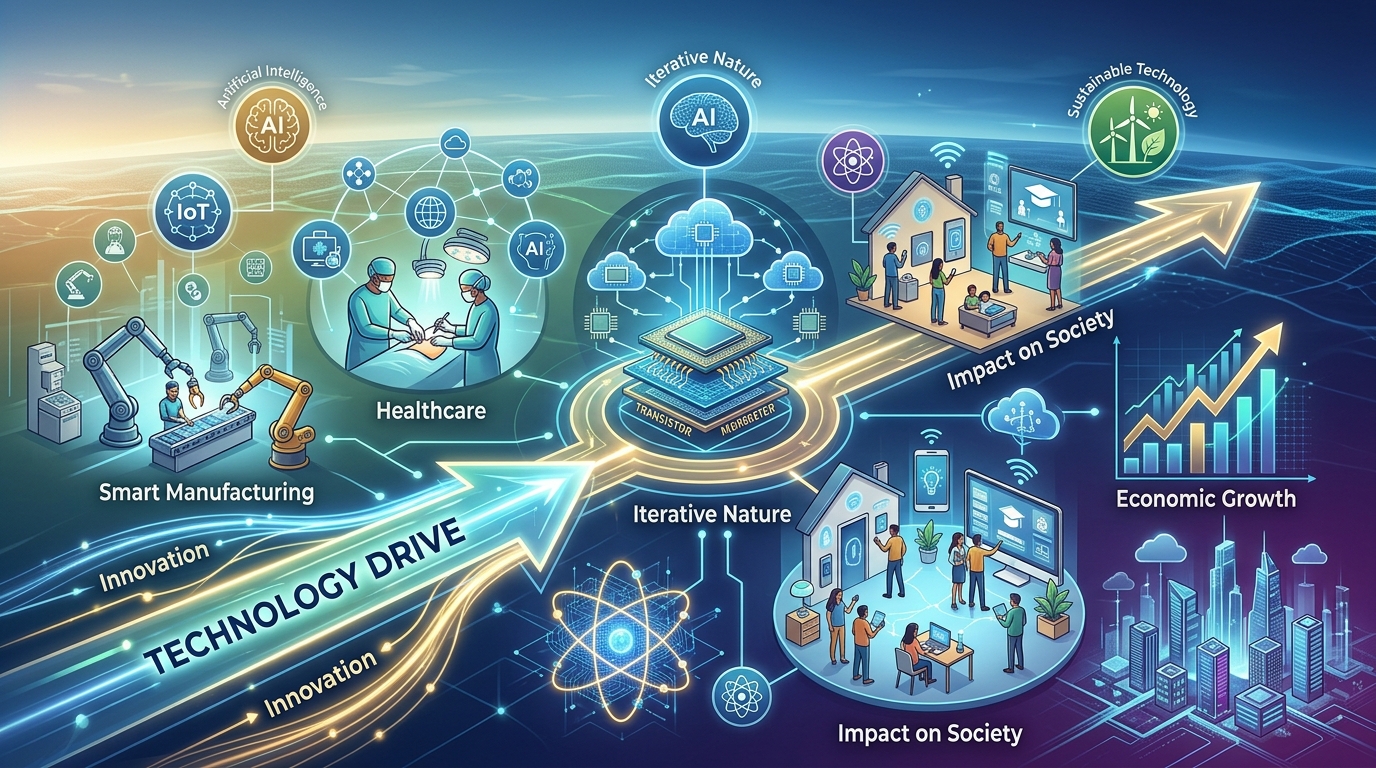
The direct link between technological advancements and the acceleration of innovation is undeniable. New tools, platforms, and methodologies consistently emerge, enabling novel solutions and discoveries that were previously unimaginable. This process, where how technology drive innovation, creates a fertile ground for breakthroughs across various fields, demonstrating that innovation drive by technology is a core characteristic of modern progress.
Catalyzing Progress Across Industries
Technology fuels innovation in specific sectors, leading to significant breakthroughs. In healthcare, advanced imaging, robotic surgery, and AI-driven diagnostics exemplify how innovation drive by technology improves patient outcomes and research capabilities. Manufacturing benefits from automation, IoT, and advanced materials, enhancing efficiency and product quality. Communication technologies have transformed global interactions, making real-time, cross-continental collaboration commonplace. These are clear examples of the widespread technological advancement benefits.
The Iterative Nature of Technological Advancement
Each technological leap often serves as a foundation for the next, creating a continuous cycle of improvement and development. For instance, the invention of the transistor paved the way for microprocessors, which in turn enabled personal computing, the internet, and mobile devices. This iterative process illustrates how technology drives innovation by building upon prior successes, leading to exponential growth in capabilities and further technological advancement benefits.
Technology’s Impact on Society and Daily Life
Beyond industry, technology profoundly reshapes societal structures, human interactions, and the routines of daily existence. Examining technology’s impact on society reveals shifts in culture, education, and governance, while its influence on individual habits highlights the pervasive role of technology in daily life.
Reshaping Communication and Connectivity
The evolution of communication technologies, from telegraph to smartphones and social media, has dramatically altered global connectivity. Instant messaging, video calls, and online platforms have broken down geographical barriers, facilitating information access and fostering new social dynamics. This transformation underscores a significant aspect of technology’s impact on society and its fundamental role of technology in daily life.
Enhancing Efficiency and Convenience in Everyday Routines
Technology simplifies tasks, automates processes, and adds convenience to both personal and professional lives. Smart home devices manage environments, navigation apps optimize travel, and online banking streamlines financial management. These applications demonstrate the tangible role of technology in daily life, providing clear technological advancement benefits that save time and effort.

The Economic Engine: Technology and Growth
The technology drive acts as a primary catalyst for economic expansion, job creation, and the transformation of business models. It is a critical component of national and global prosperity, directly influencing technology and economic growth and highlighting the extensive digital transformation benefits.
Fueling Digital Transformation and Business Evolution
Businesses leverage technology for operational efficiency, market expansion, and enhanced customer engagement. Cloud computing, big data analytics, and e-commerce platforms enable companies to optimize supply chains, understand consumer behavior, and reach global audiences. These strategies exemplify the significant digital transformation benefits that contribute directly to technology and economic growth.
Creating New Industries and Opportunities
Technological shifts lead to the emergence of entirely new sectors and a diverse range of job opportunities. The rise of software development, cybersecurity, data science, and renewable energy industries are direct outcomes of sustained technological progress. This continuous creation of new economic avenues underscores how technology and economic growth are intrinsically linked, often through innovation driven by technology
The Economic Engine: Technology and Growth
The technology drive acts as a primary catalyst for economic expansion, job creation, and the transformation of business models. It is a critical component of national and global prosperity, directly influencing technology and economic growth and highlighting the extensive digital transformation benefits.
Fueling Digital Transformation and Business Evolution
Businesses leverage technology for operational efficiency, market expansion, and enhanced customer engagement. Cloud computing, big data analytics, and e-commerce platforms enable companies to optimize supply chains, understand consumer behavior, and reach global audiences. These strategies exemplify the significant digital transformation benefits that contribute directly to technology and economic growth.
Creating New Industries and Opportunities
Technological shifts lead to the emergence of entirely new sectors and a diverse range of job opportunities. The rise of software development, cybersecurity, data science, and renewable energy industries are direct outcomes of sustained technological progress. This continuous creation of new economic avenues underscores how technology and economic growth are intrinsically linked, often through innovation driven by technology.
Technology Trends and Their Implications
Looking ahead, emerging technologies hold the potential to continue driving progress, while also necessitating careful consideration of their broader societal implications. Understanding these future technology trends is essential for preparing for the next wave of change and managing technology’s impact on society.
Emerging Technologies on the Horizon
Key future technology trends include artificial intelligence (AI), the Internet of Things (IoT), quantum computing, and sustainable technologies. AI is set to revolutionize decision-making and automation, while IoT will create hyper-connected environments. Quantum computing promises unprecedented processing power, and sustainable technologies aim to address environmental challenges. These advancements illustrate how technology drives innovation into new frontiers.
Ethical Considerations and Societal Preparedness
As new technologies develop, addressing ethical considerations and ensuring societal preparedness becomes paramount. Thoughtful development and integration are crucial to ensure positive societal outcomes and mitigate potential challenges such as data privacy concerns, algorithmic bias, and job displacement. Proactive planning is vital to manage technology’s impact on society responsibly.
Frequently Asked Questions About the Technology Drive
1.What is the primary benefit of the technology drive?
The primary benefit of the technology drive is its continuous push for innovation, leading to increased efficiency, productivity, and an improved quality of life across various aspects of human existence. These are significant technological advancement benefits.
2.How does technology contribute to economic growth?
Technology contributes to technology and economic growth by fostering new industries, creating diverse job opportunities, increasing productivity through automation and efficiency, and enabling global market expansion through digital transformation benefits.
3.What are some examples of technology’s impact on daily life?
Examples of technology’s impact on society and the role of technology in daily life include instant global communication, smart home devices, personalized entertainment, online education, and convenient access to information and services through mobile devices.
4.What are the key future technology trends to watch?
Key future technology trends include artificial intelligence (AI), the Internet of Things (IoT), quantum computing, advanced robotics, biotechnology, and sustainable energy solutions.
5.What Is the Technology Drive?
The technology drive refers to the continuous push to create, improve, adopt, and apply technologies that solve problems and expand what people and organizations can accomplish. It is an ongoing cycle in which new discoveries create new tools, those tools enable new solutions, and those solutions inspire further innovation. Advances in computing, for example, helped enable the internet, smartphones, cloud services, and modern artificial intelligence.
6.Technology Drive and the Future of Jobs
As technology changes workplaces, valuable skills can change with it. Employees increasingly need technical abilities, digital literacy, communication, problem-solving, and adaptability. Businesses can support this transition through training and reskilling. Technology can also augment human decision-making, creativity, and productivity rather than simply replacing human work.
7.Technology Drive in Education
Technology has expanded how people learn and access educational resources. Online courses, digital classrooms, educational software, collaborative platforms, and AI-assisted tools can support different learning needs and allow students to access material from many locations. Effective educational technology still depends on teacher guidance, reliable information, digital skills, and equitable access.
8.What are the disadvantages of rapid technological change?
Potential disadvantages include privacy and cybersecurity risks, job disruption, digital inequality, misinformation, environmental costs, and overdependence on digital systems.
Conclusion: The Continuous Evolution of the Technology Drive
The technology drive is a pervasive and transformative force that underpins much of human progress. Its critical role in fostering innovation, societal advancement, and economic development is evident across all sectors. From enabling groundbreaking scientific discoveries to reshaping daily routines and creating entirely new industries, the continuous push for innovation driven by technology delivers profound technological advancement benefits. As we look to the future, this inherent drive will undoubtedly continue to evolve, shaping our world in ways we are only beginning to imagine.